
Fall Quarter 2025
Listening to Los Angeles:
Care as Critical Spatial Practice
Instructors: Claire Nelischer, Doğa Tekin
Students: UHI 2025-26 Cohort
Community Partners:
Gabrielino-Tongva Springs Foundation
Grant Sunoo, Little Tokyo Services Center
Melissa Acadera, Polo's Pantry
Kaya Dantzler, We Love Leimert
“Seek, she tells me; collect everything; care for lost things; she compares love to bread baked in a wood-burning stove. She has gone before me. This flame is sacred. I am an ancestor of fire. Time has no limits.”
- Aaron A. Abeyta in What Kind of Ancestor Do You Want to Be?
How is care spatialized in the city? What role do caring relationships play in spatial justice and the “right to the city”? How is care sounded in the city? How can we listen to care, and what do we hear when we listen closely?
In the 2025 Urban Humanities Initiative Fall Seminar, a disciplinarily diverse group of graduate students used these questions to ground their engagement with the foundational theories, spatial concepts, and methodological approaches of the emerging field of urban humanities, and to focus their multimodal sound projects.
In alignment with our 25-26 academic year focus on care as critical spatial practice, the seminar linked foundational urban humanities theory with varied perspectives on care and caring. Through readings, seminar discussions, and guest presentations and field trips, we will explore the theoretical and practical potential of care - as a foundational ethic and a relational practice - to strengthen and deepen urban humanistic interpretations and interventions in the city, in Los Angeles and beyond.
In the context of Los Angeles' present polycrisis, care has emerged as a critical spatial practice that points toward more just, relational, and reciprocal relations in the city. Centering the theme of care, students used close listening, sound scavenging, and sonic production methods to develop sonic thick maps and accompanying zines that explore and interpret the multisensorial and multiscalar dimensions of care across several distinct Los Angeles landscapes—namely, Mountains, Rivers, Valleys, and Beaches.
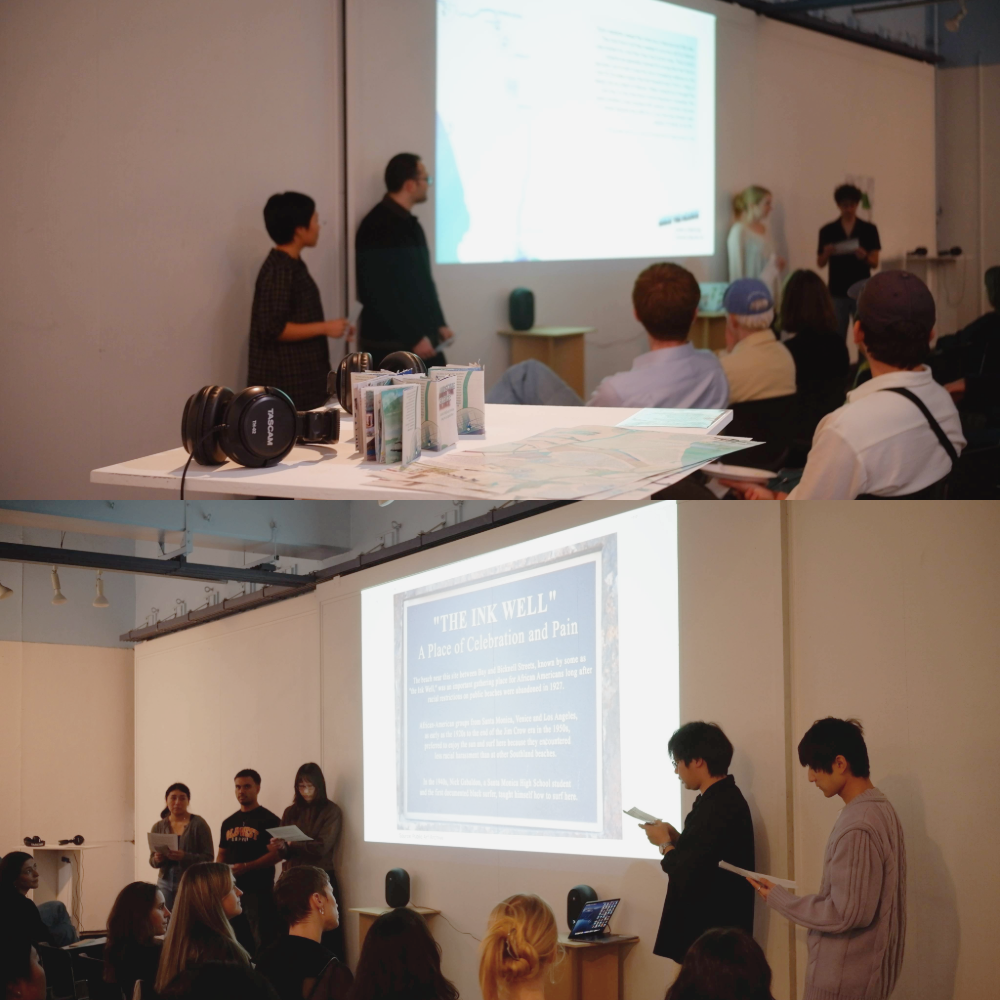
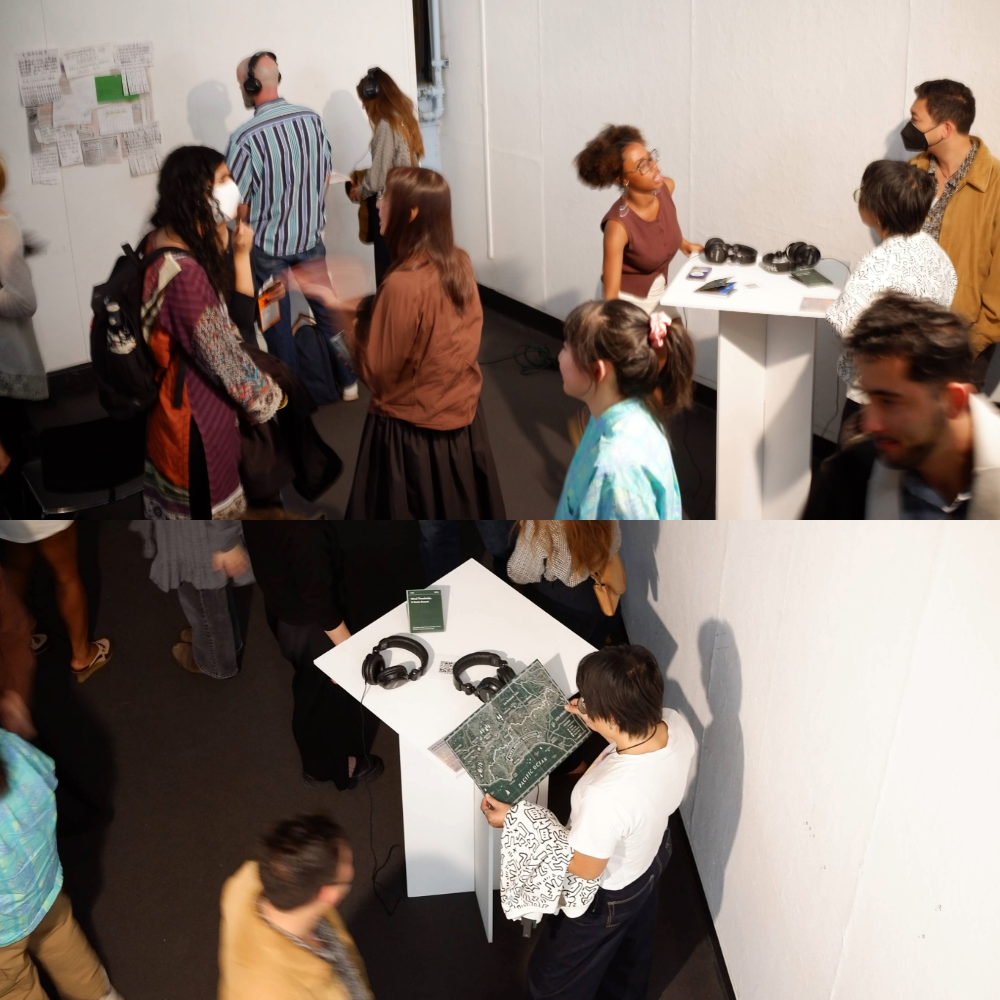
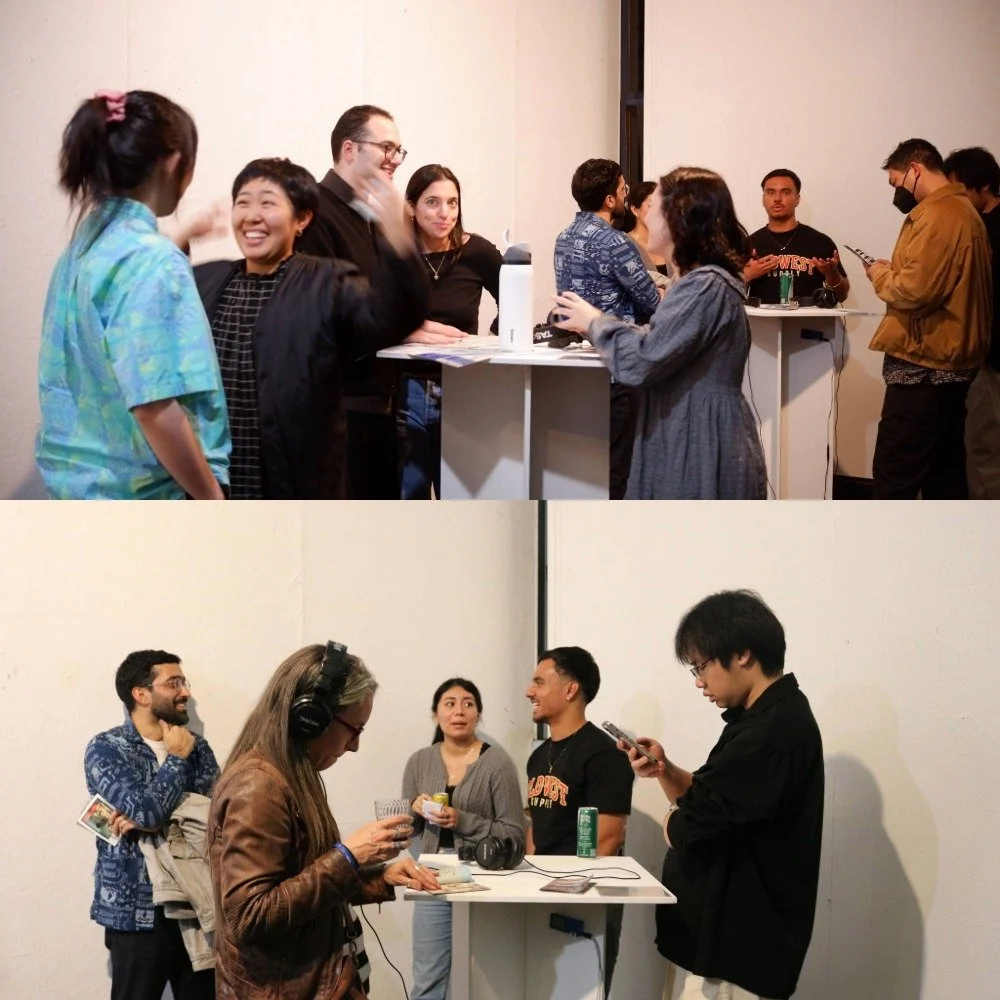
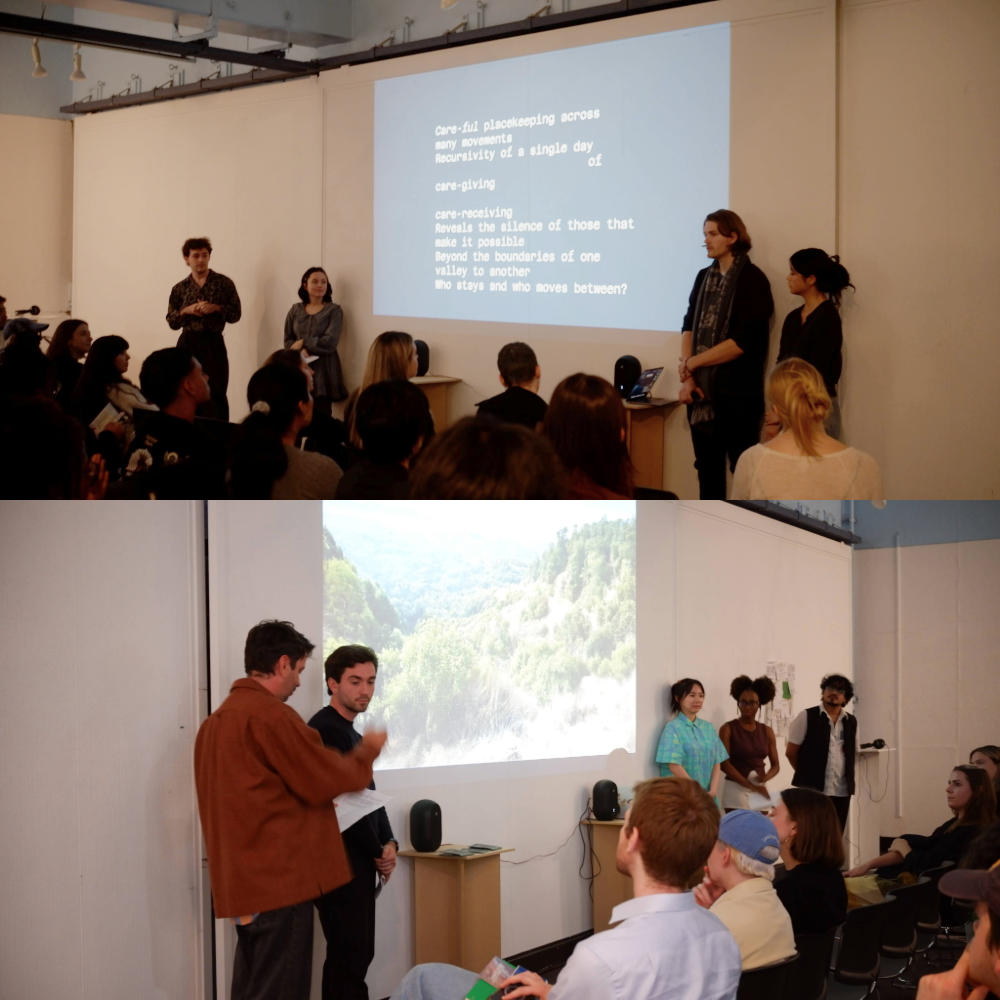
The course culminated in a public presentation and exhibition of the students' sonic thick maps and zines that invited colleagues, friends, and community partners to engage with these layered, multisensory interpretations of how care is spatialized and sounded in the city.
Amidst the Silence: Conflict of (Un)Caring Practices along the Los Angeles River
Students: Ícaro Carvalho, Evan Eshel, Anna Shoemaker, and Heidi Yang
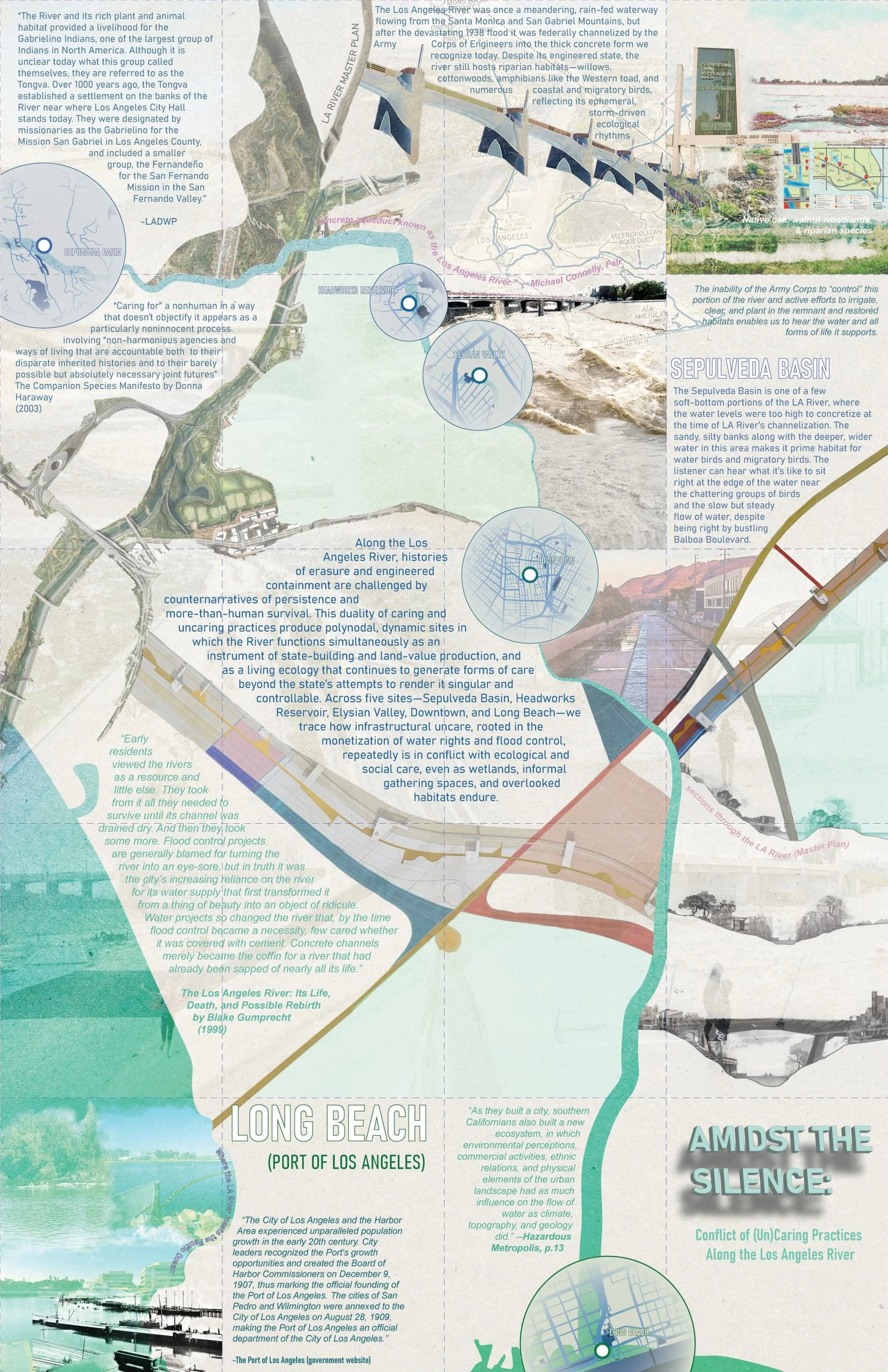

Along the Los Angeles River, histories of erasure and engineered containment are challenged by counternarratives of persistence and more-than-human survival. This duality of caring and uncaring practices produce polynodal, dynamic sites in which the River functions simultaneously as an instrument of state-building and land-value production, and as a living ecology that continues to generate forms of care beyond the state’s attempts to render it singular and controllable. Across five sites—Sepulveda Basin, Headworks Reservoir, Elysian Valley, Downtown, and Long Beach—we trace how infrastructural uncare, rooted in the monetization of water rights and flood control, repeatedly is in conflict with ecological and social care, even as wetlands, informal gathering spaces, and overlooked habitats endure.
Our sonic thick map stages this argument by layering three forms of sound: field recordings that capture the River’s present tensions; archival audio that foregrounds the longue-durée histories of intervention; and contemporary voices from environmental and community actors who envision alternative modes of relational care. These layers overlap and interfere rather than resolve, making audible a River defined not by stability, but by ongoing contestation, negotiation, and the persistent emergence of life.
Winds Thresholds: A Sonic Ascent
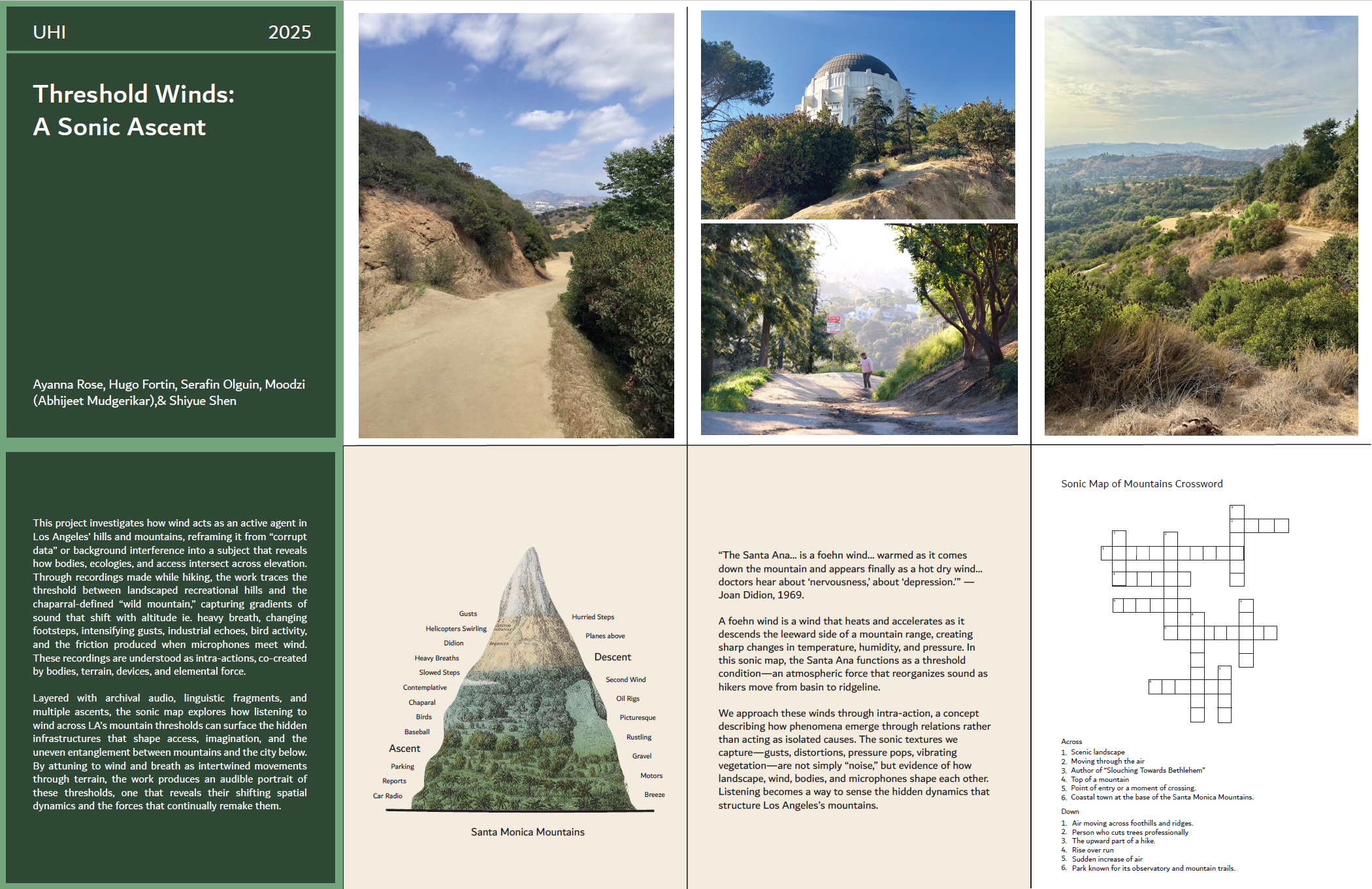
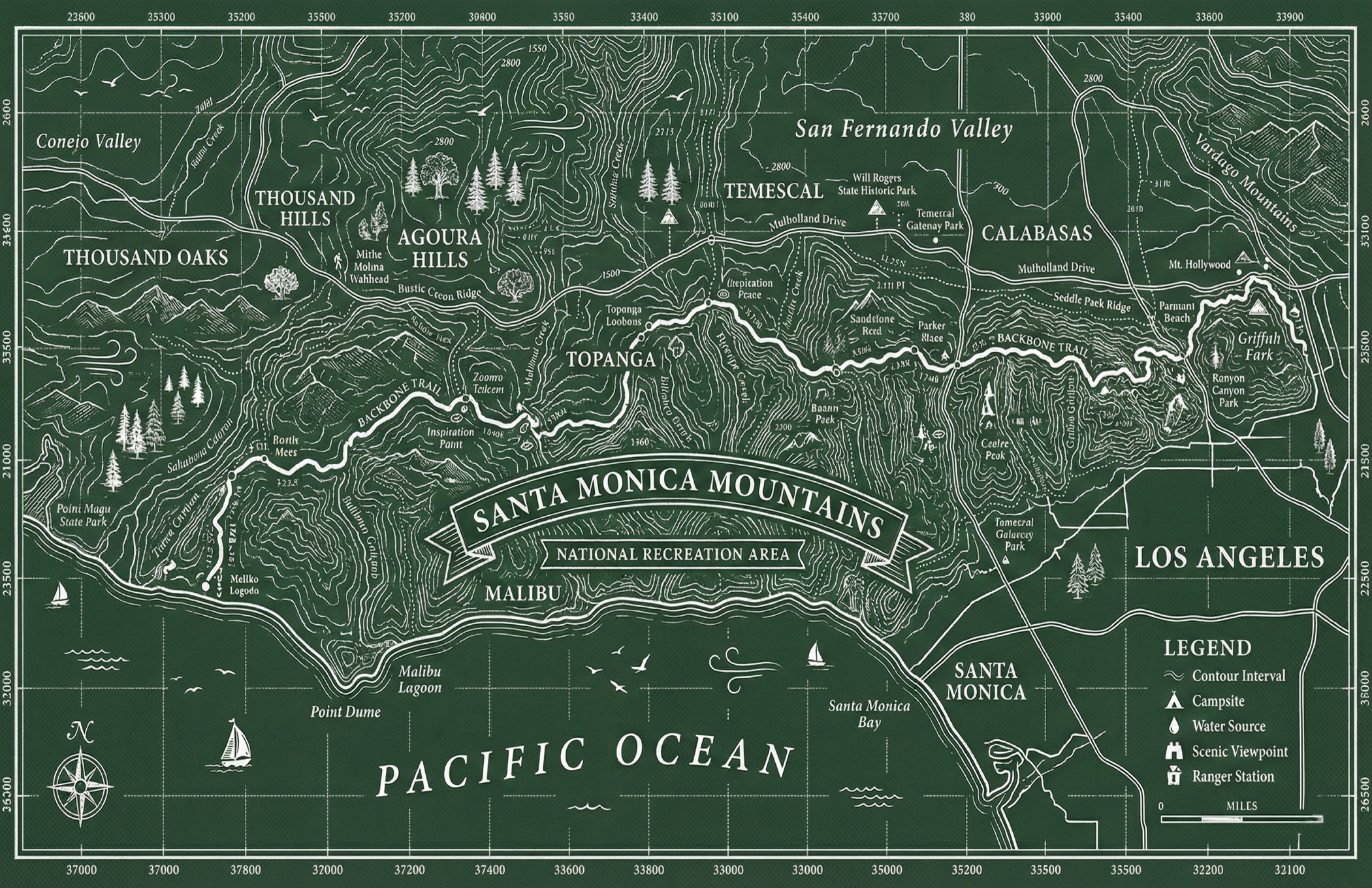
Students: Ayanna Rose, Hugo Fortin, Serafin Olguin, Moodzi (Abhijeet Mudgerikar), and Shiyue Shen
This project investigates how wind acts as an active agent in Los Angeles’ hills and mountains, reframing it from “corrupt data” or background interference into a subject that reveals how bodies, ecologies, and access intersect across elevation. Through recordings made while hiking, the work traces the threshold between landscaped recreational hills and the chaparral-defined “wild mountain,” capturing gradients of sound that shift with altitude ie. heavy breath, changing footsteps, intensifying gusts, industrial echoes, bird activity, and the friction produced when microphones meet wind. These recordings are understood as intra-actions, co-created by bodies, terrain, devices, and elemental force.
Wind appears as a presence that shapes ecological processes, influences fire behavior, and moves non-human life across terrain. Yet public narratives often frame it solely as a disruptive or destructive element. This project listens through those contradictions, asking how wind participates in shaping mountain environments and the experiences of those who move through them.
Layered with archival audio, linguistic fragments, and multiple ascents, the sonic map explores how listening to wind across LA’s mountain thresholds can surface the hidden infrastructures that shape access, imagination, and the uneven entanglement between mountains and the city below. By attuning to wind and breath as intertwined movements through terrain, the work produces an audible portrait of these thresholds, one that reveals their shifting spatial dynamics and the forces that continually remake them.
Currents of Care on the Shores of Santa Monica
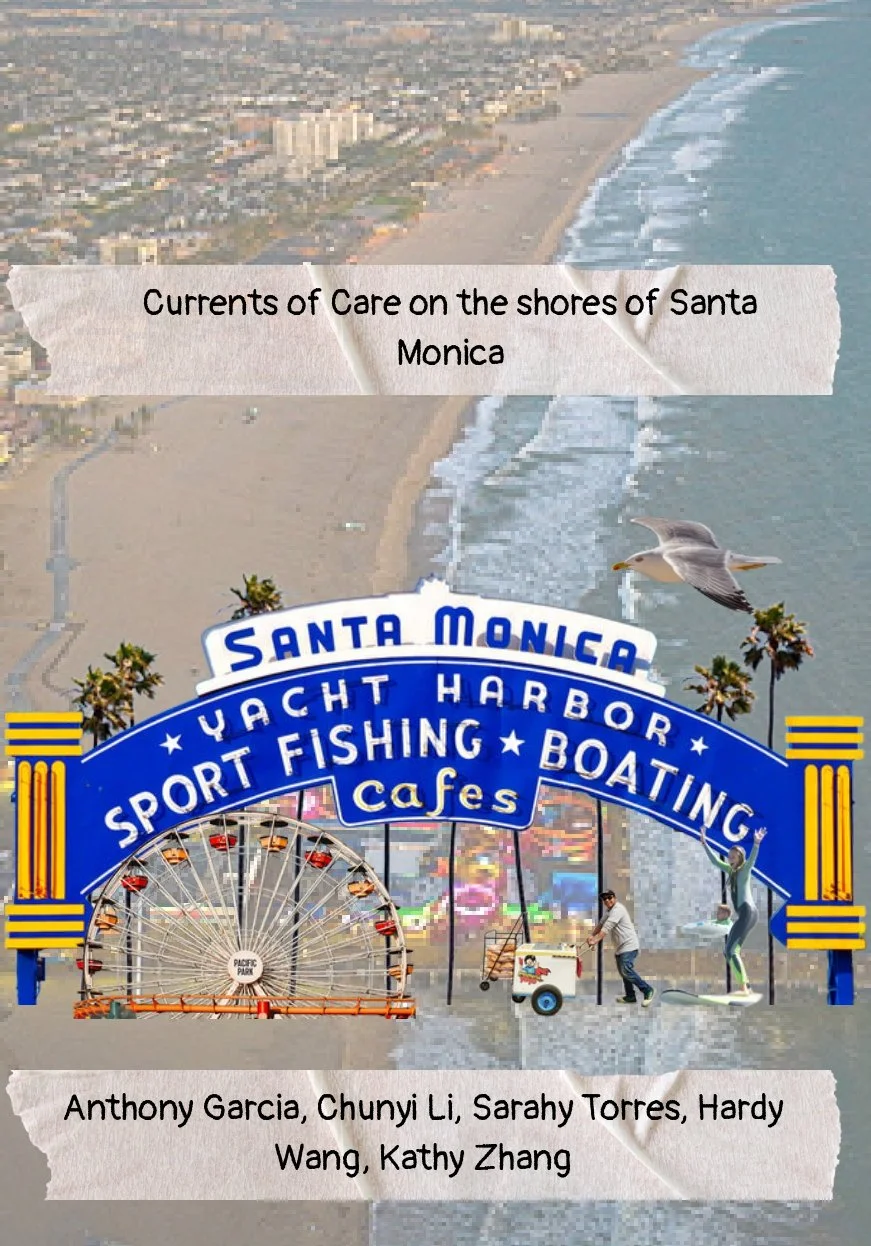
Students: Anthony Garcia, Chunyi Li, Sarahy Torres, Hardy Wang, Kathy Zhang
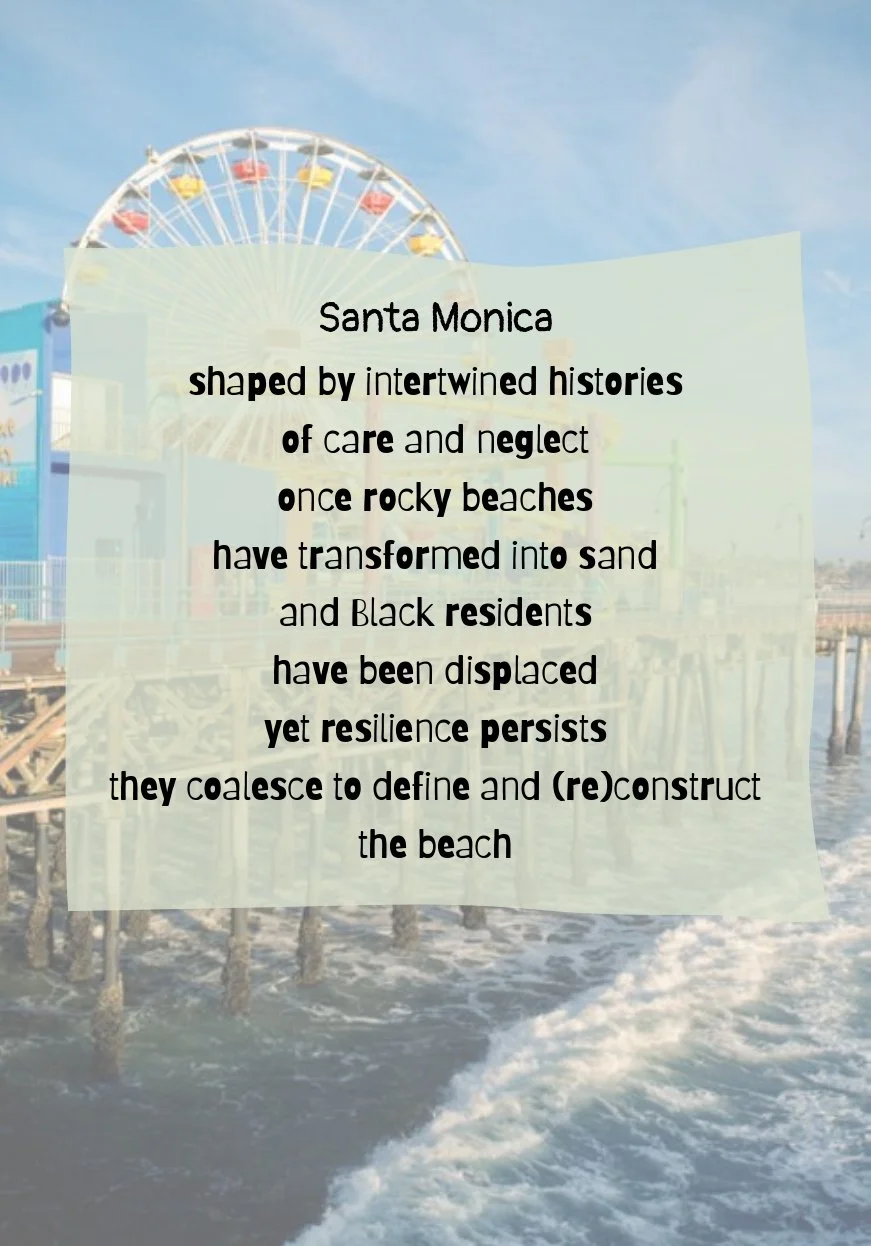
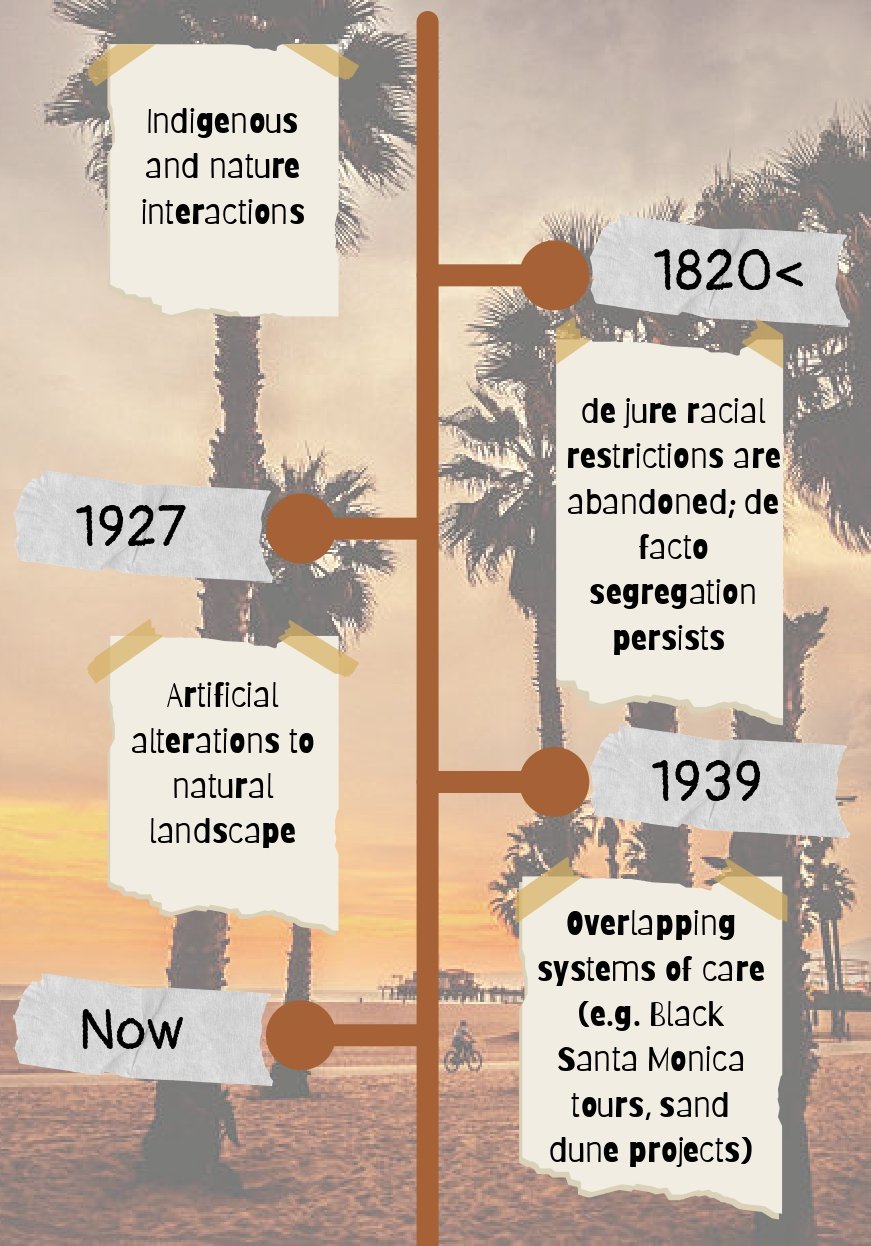
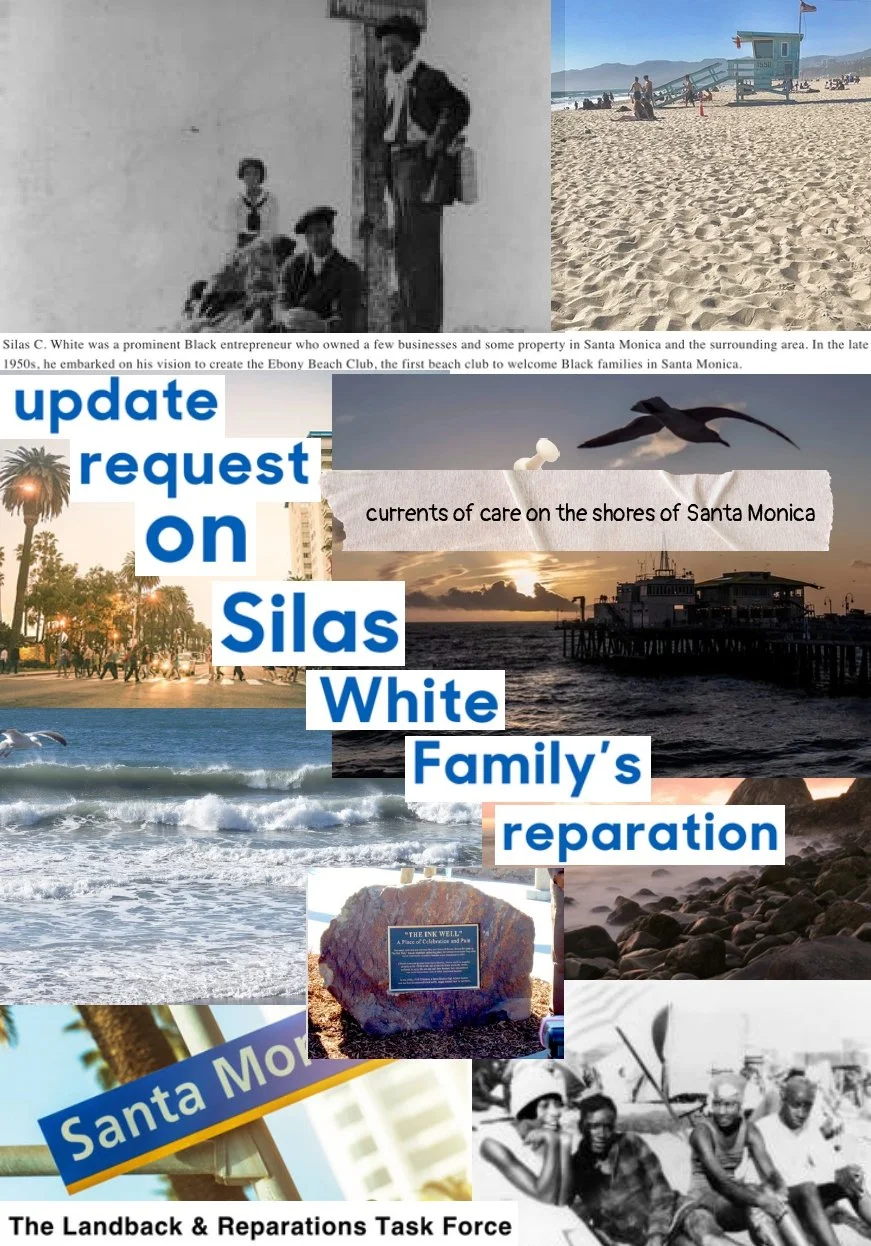
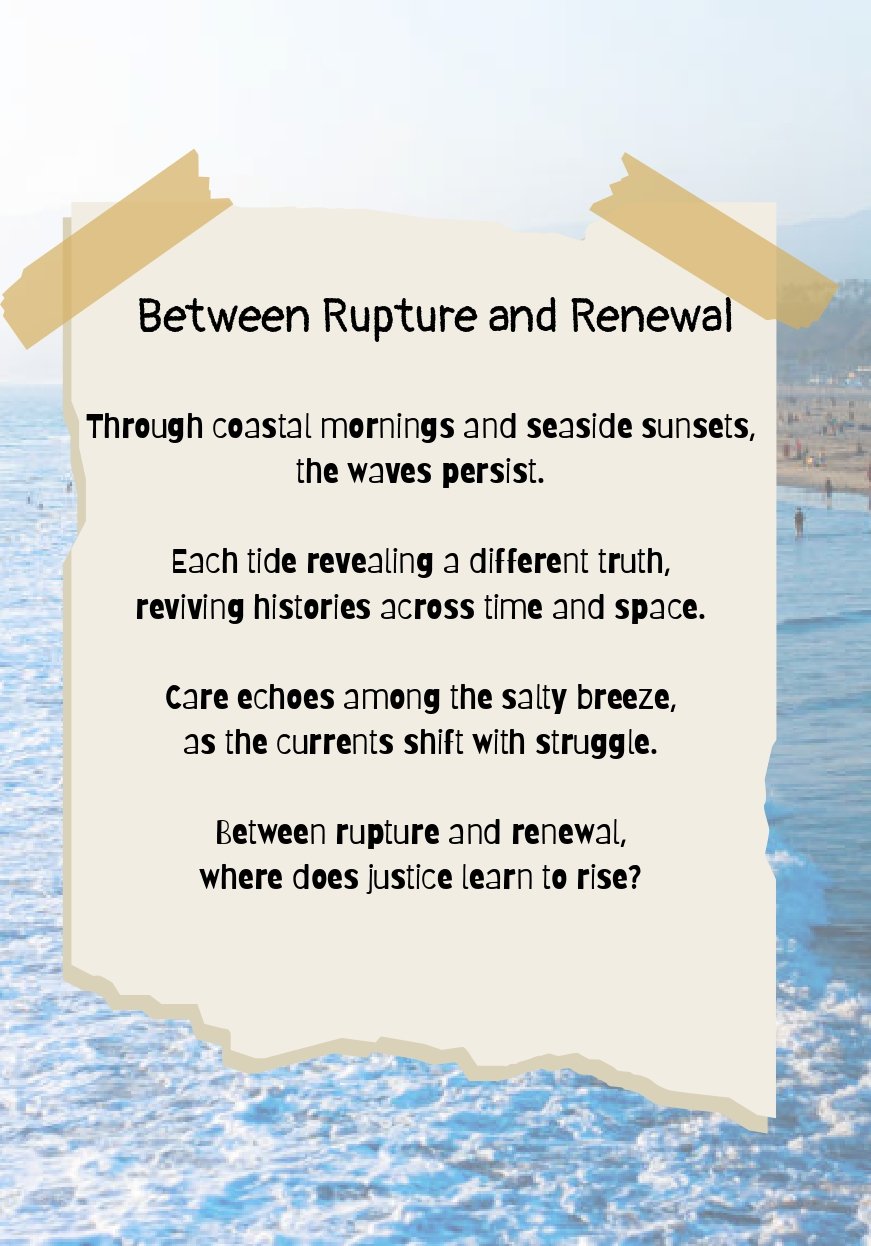
Santa Monica’s shoreline is shaped by intertwined histories of care and neglect, where once rocky beaches were transformed into sand, and Black residents were displaced by white, wealthy residents. Resilience persists in acts of remembrance and reparation, sand dune projects, beach cleanups, and the everyday joy of beach-goers. These tensions coalesce to define and (re)construct the beach.
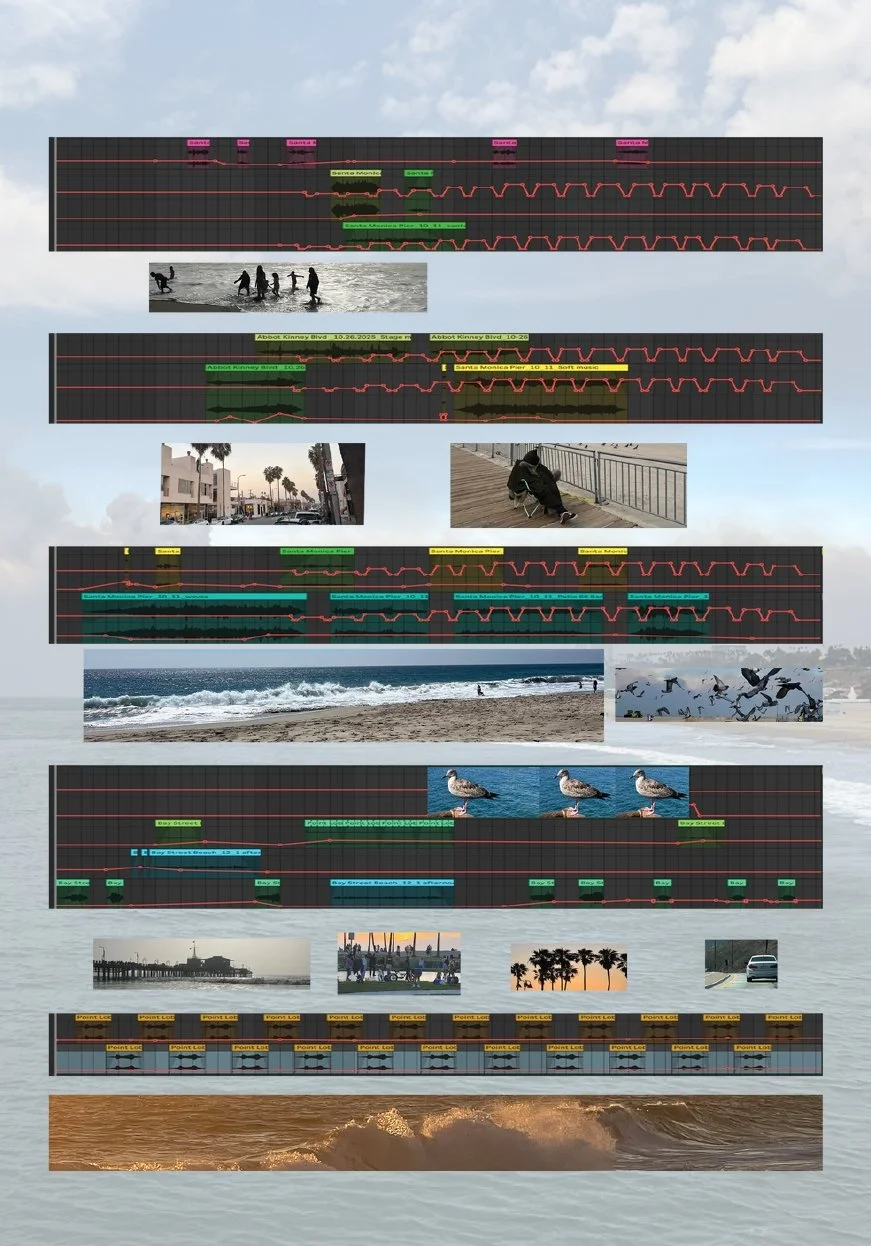
Our map engages with these dynamics by layering and manipulating sounds of the shore. It is grounded by constant waves alternating between the ears and faint laps of water, situating the listener in a directionless yet familiar coastal atmosphere. Gradually, context accumulates through sounds that encapsulate the joyous and unfettered nature of the beach, like children’s laughter and a candid, serendipitous greeting of “welcome to Santa Monica!” The piece continues to swell with multilingual dialogue, music of various cultural backgrounds, laughter, the crunch of sand, and found audio, including a Black resident recounting childhood memories at the beach and a news segment describing reparation efforts for the family of Silas White. As the piece progresses, these sounds slowly align with the cadence of the waves, emphasizing the interconnectedness of care through memory, joy, and experience in Santa Monica’s beaches.
(Food)ways of Caring: Daily Movements Across Valley
Students: Alexander Morris, Isabel Filson, Lynn Hur, Skijler Hutson
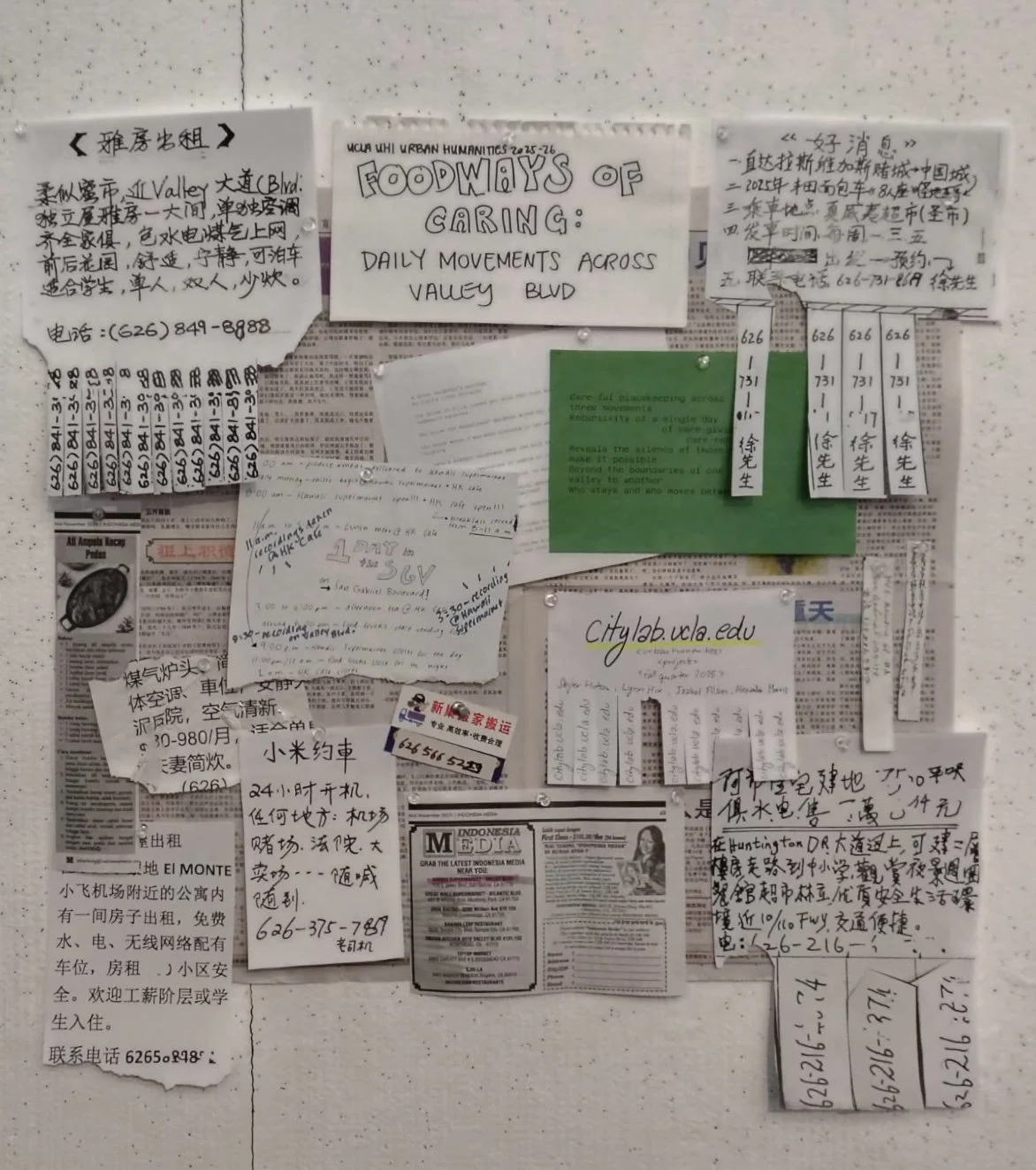
Recursive movements of immigration, across both the Southern Border and the Pacific Ocean, have carved out the San Gabriel Valley (SGV) as a uniquely multigenerational, intercultural geography in Los Angeles. Valley Boulevard, a major corridor through the SGV, reflects the range and nuances of the valley as a site of careful placekeeping through food.
Our map spans across a single day. We begin and end, like most urban foodways, at the shipping depot, and follow the transport of goods to SGV’s iconic establishments. Try to listen closely for the many languages and dialects of HK Cafe’s bustling patrons and workers. At Hawaii Supermarket, intercom announcements and nostalgic playlists curated by workers blast morning to night. And as the evening settles in and supermarkets close, the engines of Chinese food trucks grumble on at an informal night market along San Gabriel Blvd.
Between these layers, we trace the geographies of migrant labor these communities rely on. Two poems, “Dozens Daughters’ Savings” by activist and poet Lupita Limón Corrales and “Inter State” by writer and film producer José Vadi, tell stories of movement and labor, crossing borders, spanning generations.