Sidewalking: Design for Equitable Youth Mobility
Year: 2026
cityLAB is grateful for generous support for this project from UCLA's Office of Research and Creative Activities through the Acceleration Grants program and from the National Endowment for the Arts through the Grant for Arts Projects.
Alongside our community partners at Heart of Los Angeles (HOLA), cityLAB has used innovative, youth-centered, transdisciplinary methodologies to understand the social and spatial conditions shaping youth mobility experiences in Westlake, Los Angeles. We have also worked collaboratively with young Angelenos to develop ideas to improve mobility in their neighborhood.
We know that a complex set of social and spatial conditions shape young Angelenos' daily journeys, and that poorly maintained sidewalks and adjacent public spaces are infrastructural symbols of structural inequities. We also know that safe, everyday urban mobility can foster wellbeing and belonging among youth; indeed, young pedestrians in Westlake wish for safe, social spaces for waiting and resting along their journeys where they can connect with friends and with the neighborhood. So how can we translate this rich portrait of youth mobility experiences and needs into real impact in the built environment?
This project, Sidewalking: Design for Equitable Youth Mobility, extends our earlier research into tangible, artistic interventions to improve the mobility and public realm experiences of young pedestrians. It is a collaborative, youth-centered, and community-engaged project to design and fabricate a series of micro-urban interventions that support safe, social everyday mobility and improve the public realm experiences for young people in Westlake-MacArthur Park.
Here's how we used design- and community-based research strategies to bring these insights and ideas to life in public space.
1 Community-based partnerships
Our longstanding collaboration with Heart of Los Angeles (HOLA) was essential to this project. Working together on research related to intergenerationality, public realm, and mobility justice built trust and shared knowledge. Working together with HOLA youth and teachers, we applied cityLAB's design and community-based research expertise to translate our youth-centered insights into youth-serving infrastructure. In the process, we engaged young Angelenos, HOLA staff and teachers, and Los Angeles Recreation and Parks partners to deliver a truly community-engaged, collaborative, and materially impactful research program.
2 Laying the groundwork
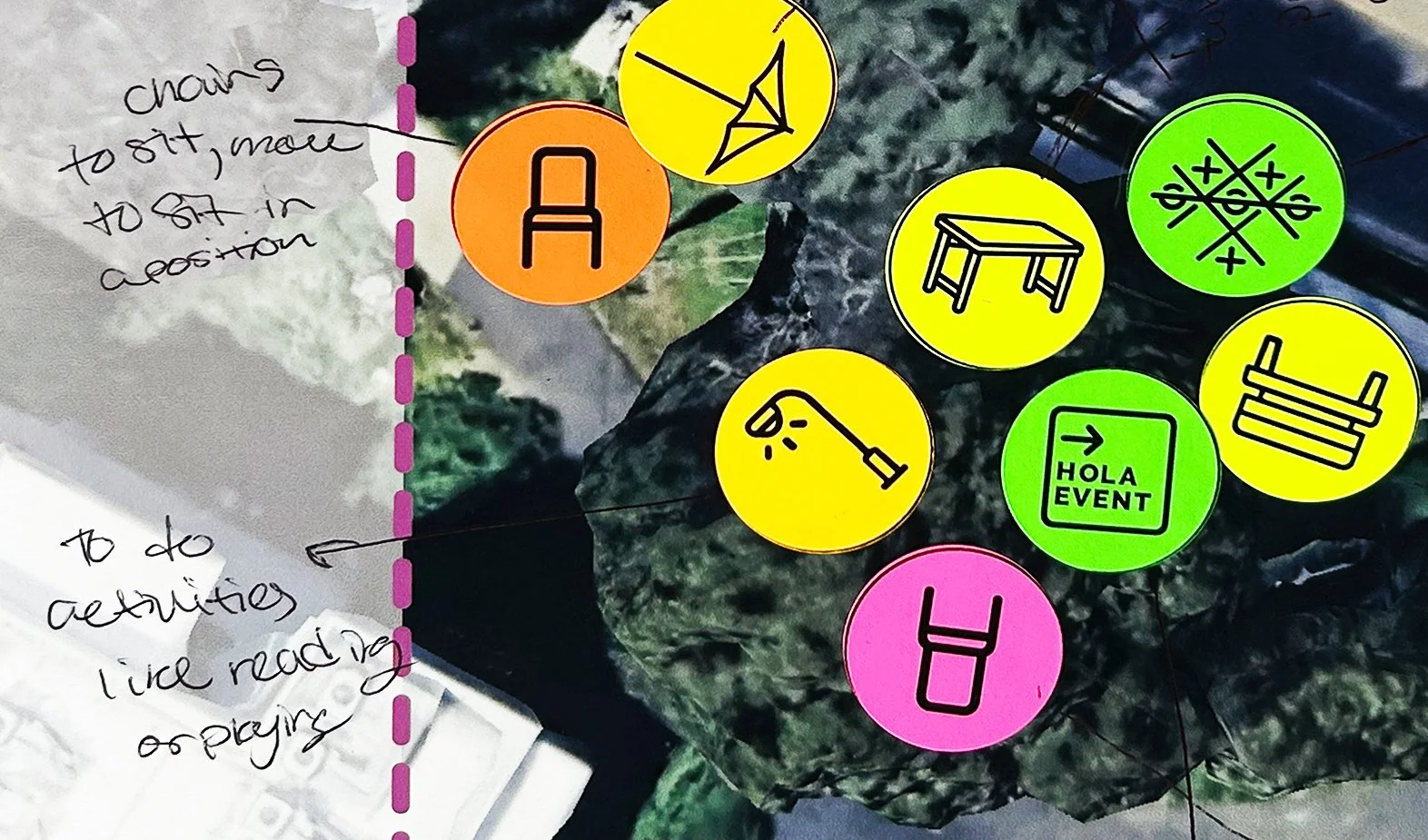
We began by consulting and confirming our earlier research findings: what we knew about the neighborhood's existing public realm conditions and about young residents' needs and aspirations for the future. We then developed a series of design concepts for possible micro-urban interventions that would support youth mobility and public realm experiences in Lafayette Park, adjacent to HOLA's Arts and Recreation Center. Throughout this process, we sought ideas and input from HOLA staff and teachers and confirmed our assessments of the project's goals, and also confirmed site and maintenance parameters with Los Angeles Recreation and Parks, the agency that owns Lafayette Park. This established the possibilities and (productive) constraints of our project.
3 Youth-centered participatory design
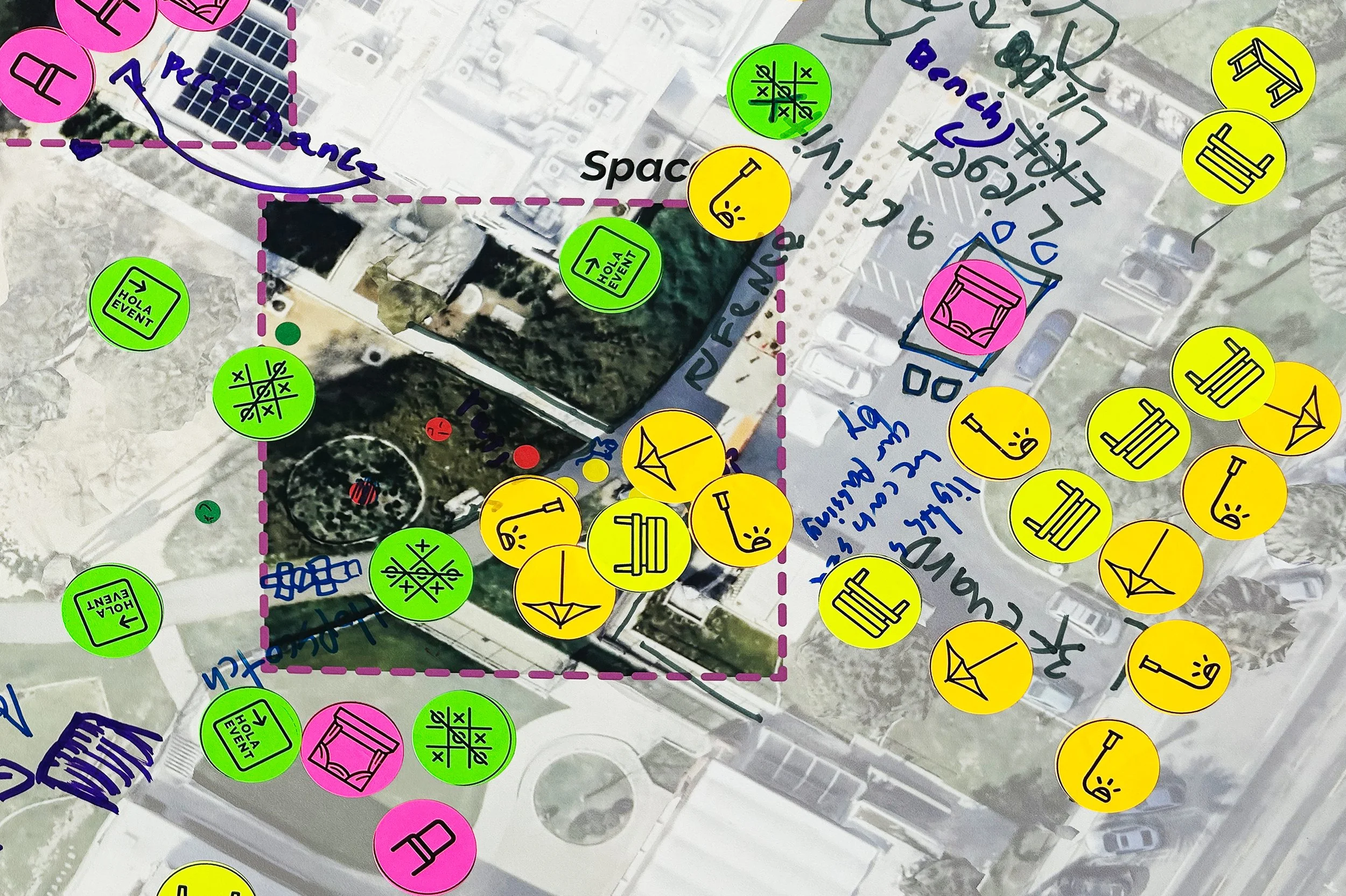
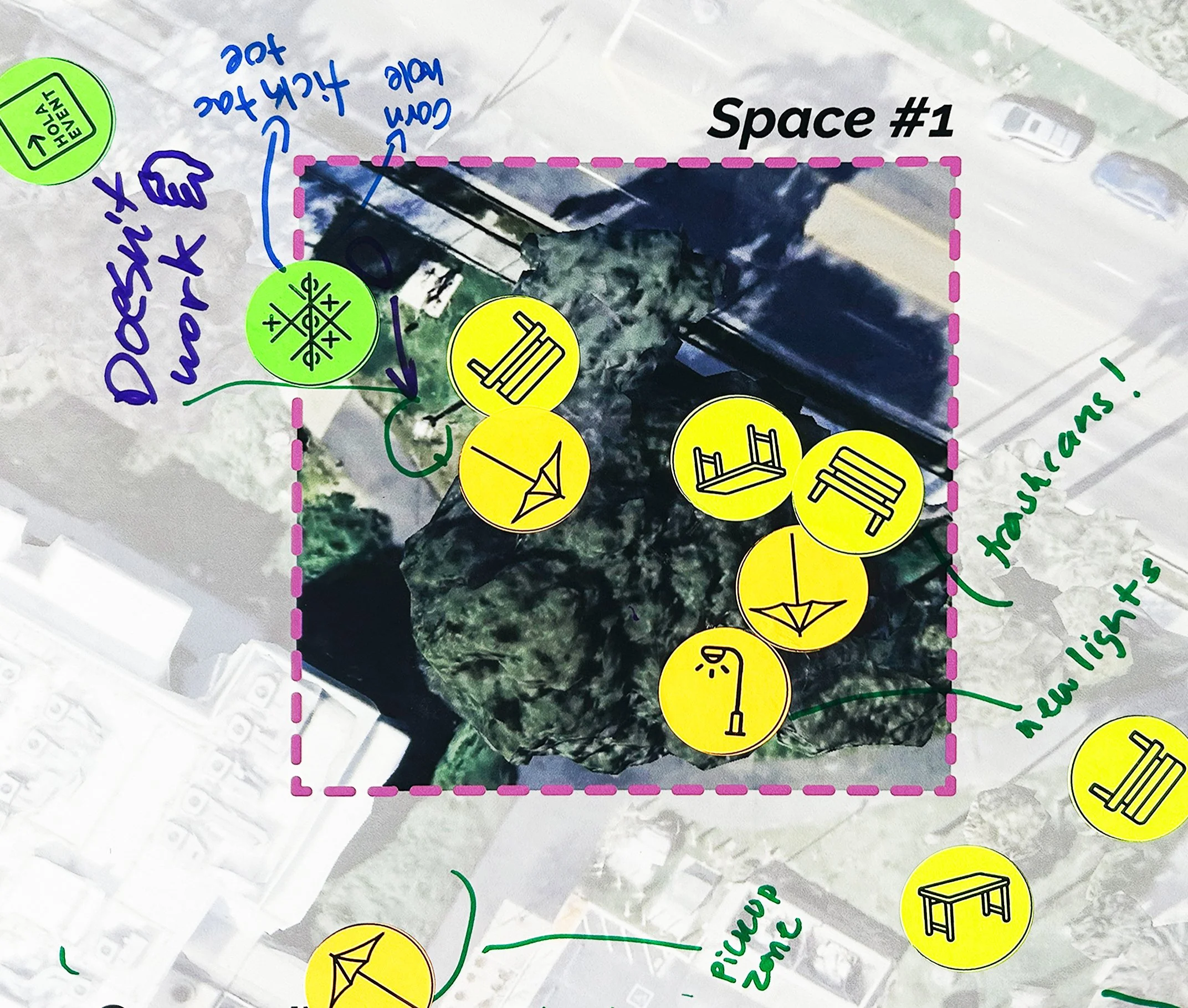
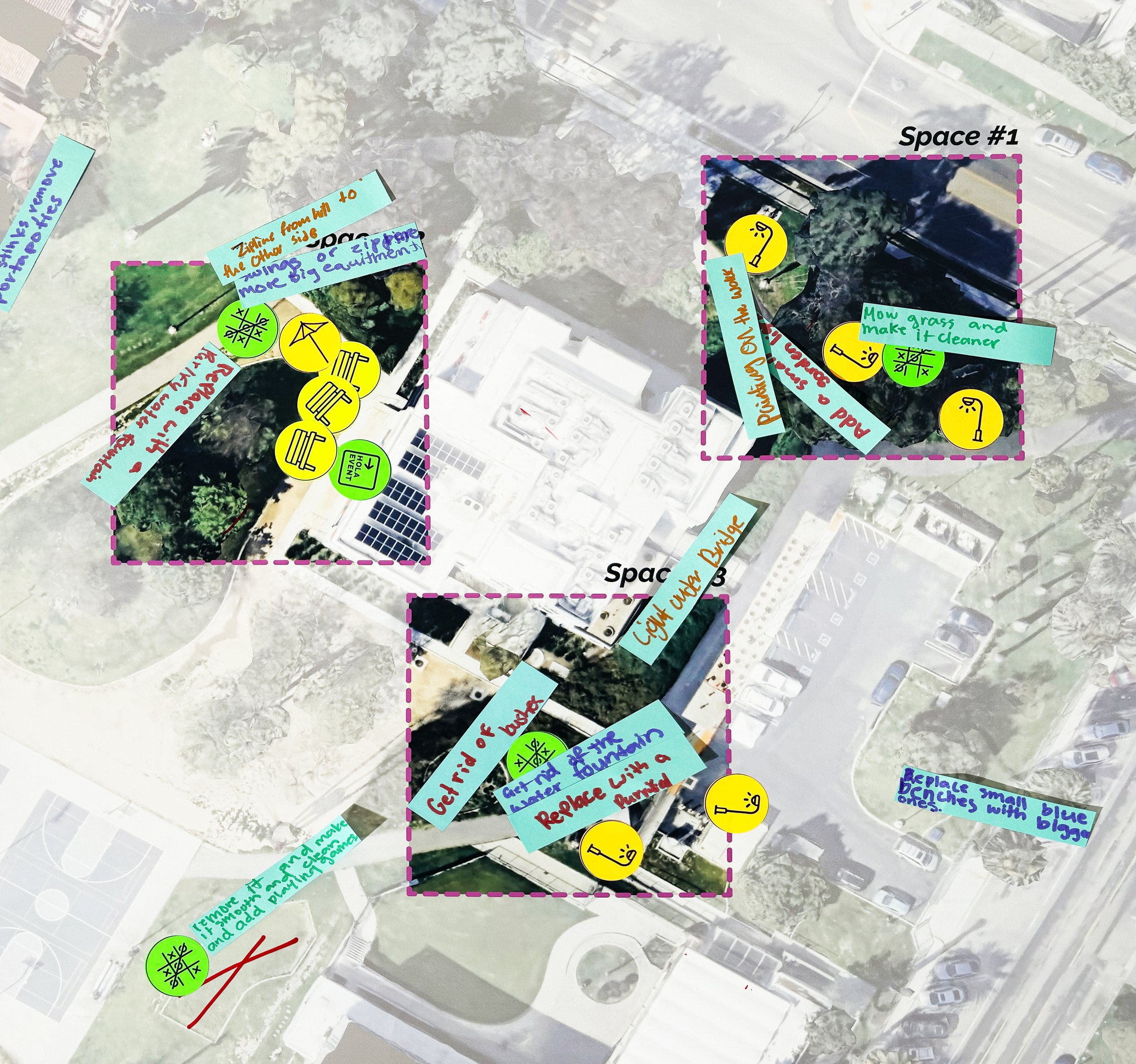
Next, we invited the project's end users – HOLA's students – to contribute as design collaborators. During a series of participatory design workshops, our researchers and design team gathered together with HOLA students aged 6 to 13 to present our early ideas and gather their input to inform future iterations. We began by walking the site with students to generate a shared awareness and spatial language that helped us connect to the space and its possibilities. The workshop connected past experiences to future needs. We asked a series of questions that invited students to reflect on their memories of the site and the challenges and opportunities they saw. Students imagined how they could use the space in the future, and what kinds of furniture and other features would best support their needs. Together we considered what everyday use of the space might look like, and also opportunities for special events and occasions. Working directly with the students, these workshops allowed us to identify key needs, challenges, and opportunities on the site, linking earlier design research with more tangible outcomes in the public realm.


4 Design development and experimentation
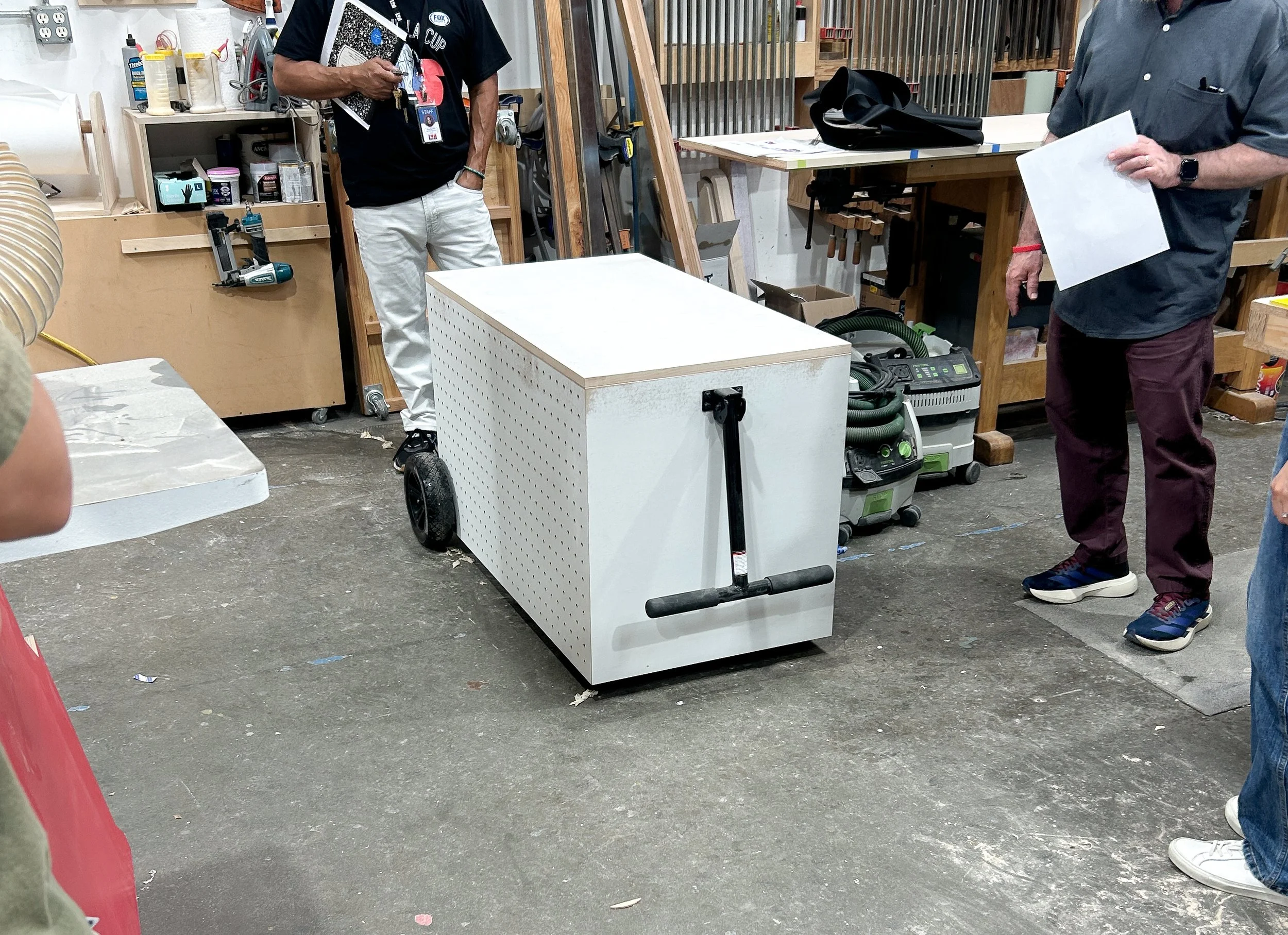
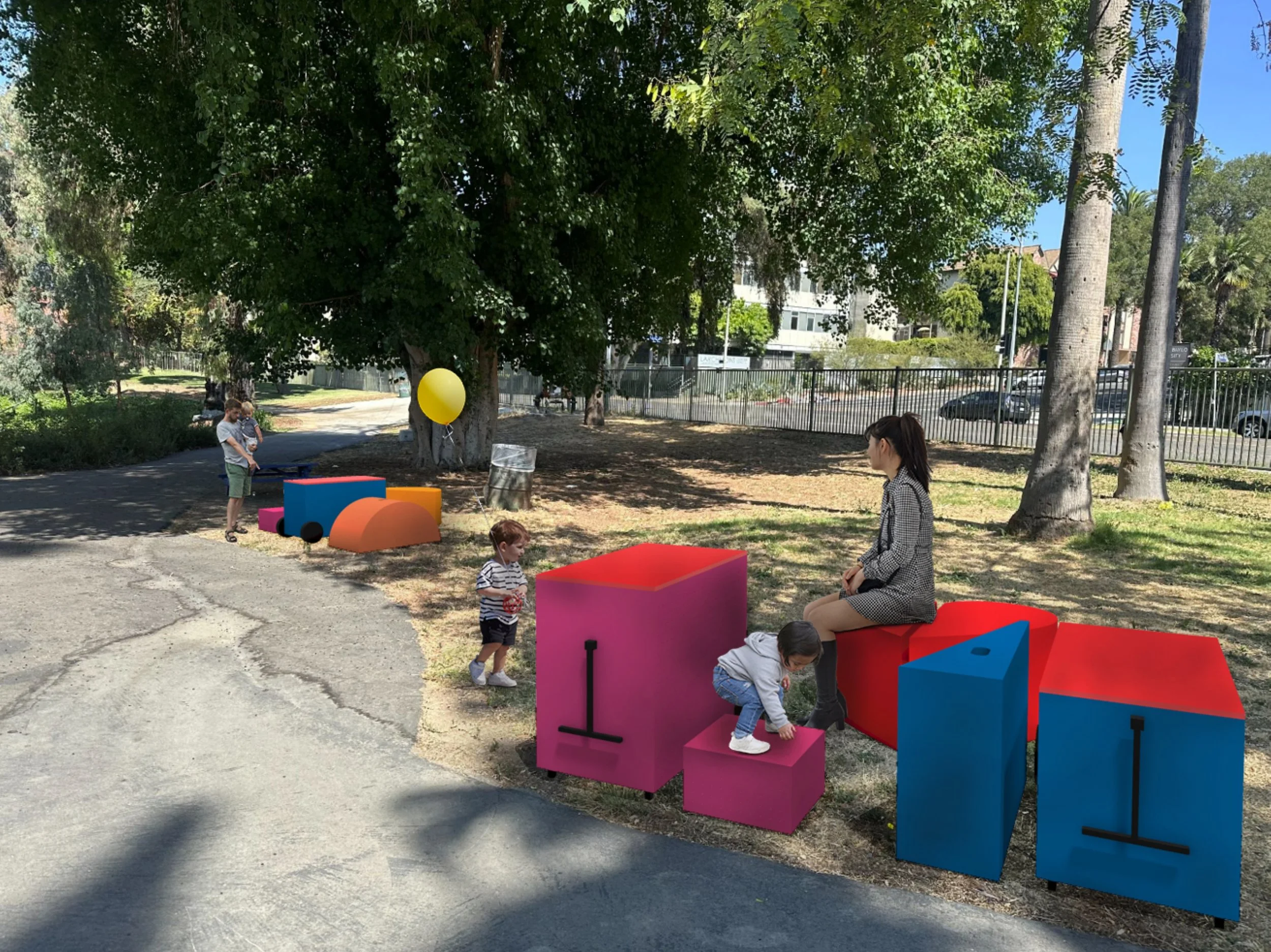
With the information gathered from our discussions and workshops, our design team refined our concepts and developed detailed designs for two linked micro-urban interventions: a mobile furniture system and a series of lightweight, moveable features for seating and play. We worked through many iterations, creating mock ups and prototypes and refining elements until the design met our criteria: youth-friendly, beautiful, functional, flexible, and easy to use and move.
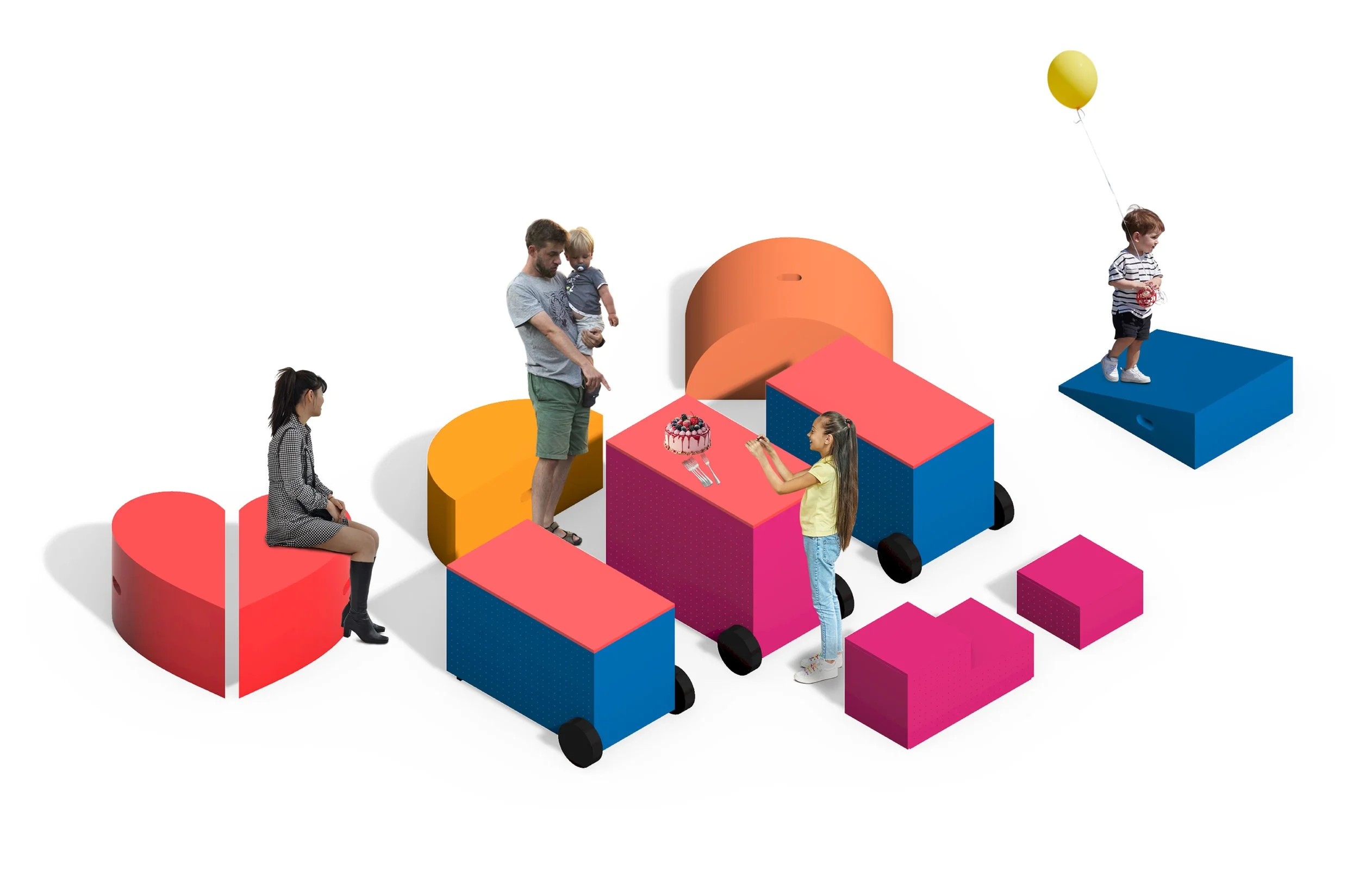
The final project includes two interventions. The first is a mobile furniture system composed of three wheeled storage carts: one at countertop height and two at desk height. All three provide usable work surfaces, supporting outdoor teaching activities and everyday family needs, such as parents preparing food for toddlers while waiting for programs or transportation. Pegboards designed along the sides of the carts provide flexible surfaces for interactive activities, displays, and signage. One of the carts also incorporates two wood stools designed to accommodate multiple seating postures. The carts are paired with a second intervention: five lightweight foam pieces in playful geometric shapes, designed with integrated handholds so that children can easily move and reconfigure them for play and outdoor activities. The pieces draw from HOLA’s visual identity and color palette, making the system recognizable as part of the organization while giving it a joyful presence in Lafayette Park.
5 Micro-urban interventions
Designed as a compact and flexible kit, the furniture can be stored indoors when not in use and easily rolled or carried outside as needed. Its multiple configurations allow HOLA staff, students, and families to adapt the same set of elements for rehearsals, ad hoc events, outdoor teaching, informal play, family gatherings, or waiting for buses. Together, these micro-urban interventions are designed to expand how HOLA's youth, their families, and their teachers can use the spaces immediately around their programs. Students can wait, rest, gather, and play; teachers can move classes and activities outdoors; and families and friends can have a safe, beautiful, and functional space that supports socializing, respite, and intergenerational engagement. The result is a flexible kit of youth-serving infrastructure that supports both HOLA's regular classes and its special events and arts programming in the park.
Credit
Yang Yang, Claire Nelischer, Sydney Patterson, Griffin Kinch, Ethan Boll
Partner
Heart of Los Angeles (HOLA), City of Los Angeles Department of Recreation and Parks
6 Fabrication + installation
Working in collaboration with our fabrication partners, we are working to produce the final micro-urban interventions. Our next step is to install the final micro-urban interventions in Lafayette Park, alongside a celebration to acknowledge the contributions of HOLA's students and staff who helped bring this project to life. We will examine use patterns in the space over time to evaluate its impact and inform future iterations.
The project is an important illustration of the ability of design research to inform justice-oriented change in the urban built environment. The micro-urban interventions make material the insights from our earlier youth mobility research and visioning exercises, demonstrating the unique power of design research to extend insights into action. Because this kind of materially productive research activity is often challenging to fund through traditional research grants, the support from UCLA's Office of Research and Creative Activities and the National Endowment for the Arts was instrumental, helping to make material this proof of concept and extending cityLAB's longer-term research agenda.