Spring Quarter 2026
Care, Place, and Performance: Memory and Recovery in Post-Fire Altadena
Instructors: Claire Nelischer, Doğa Tekin
Students: UHI 2025-26 Cohort
Community Collaborators:
Melissa Aldama, Altadena Historical Society
Diana Wong, Bob Lucas Memorial Library, Altadena
“Repertoire requires presence: people participate in the production and reproduction of knowledge by 'being there.'"
(Diana Taylor, The Archive and The Repertoire, 2003)
How might we, as urban humanists, ethically engage with this place and time? How can we work in ways that encourage thoughtful reflection, witnessing, and accountability for the 2025 Eaton Fire, and make space for justice-oriented visions of recovery? What does it mean to share stories of the everyday urban places, infrastructures, and relationships of care that are central to Altadena's past, present, and shared future? What are these stories capable of producing?
For the fourth and final course of the 2025-2026 Urban Humanities Graduate Certificate Program, we turned our attention to Altadena to probe the potential of performance-based practices as expressions of care for people and place. The course complemented cityLAB's ongoing efforts around memory, care, and public narratives in Altadena, as well as the Spring 2026 AUD Course Spatial Justice in the City. Course collaborators included the Altadena Historical Society and the Bob Lucas Memorial Library (Altadena Library District), and community partners and presenters including James Farr (journalist, host of Conversation Live), Winstone Thorne (Architect, member of SoCal NOMA), Alma Cielo (artist, leader of 1000 Voices Altadena Mosaic), and Adrian Scott Fine (Executive Director, Los Angeles Conservancy).
Drawing upon insights from community collaborators and partners, students integrated interdisciplinary and multi-modal urban humanities practices to research, analyze, and represent legacies, practices, and futures of care in Altadena. Working in small groups, students experimented with site-based and socially-engaged spatial research, performance, representation, and engagement practices to explore contested histories, critically examine the present moment, and open possibilities for projection and futurity.
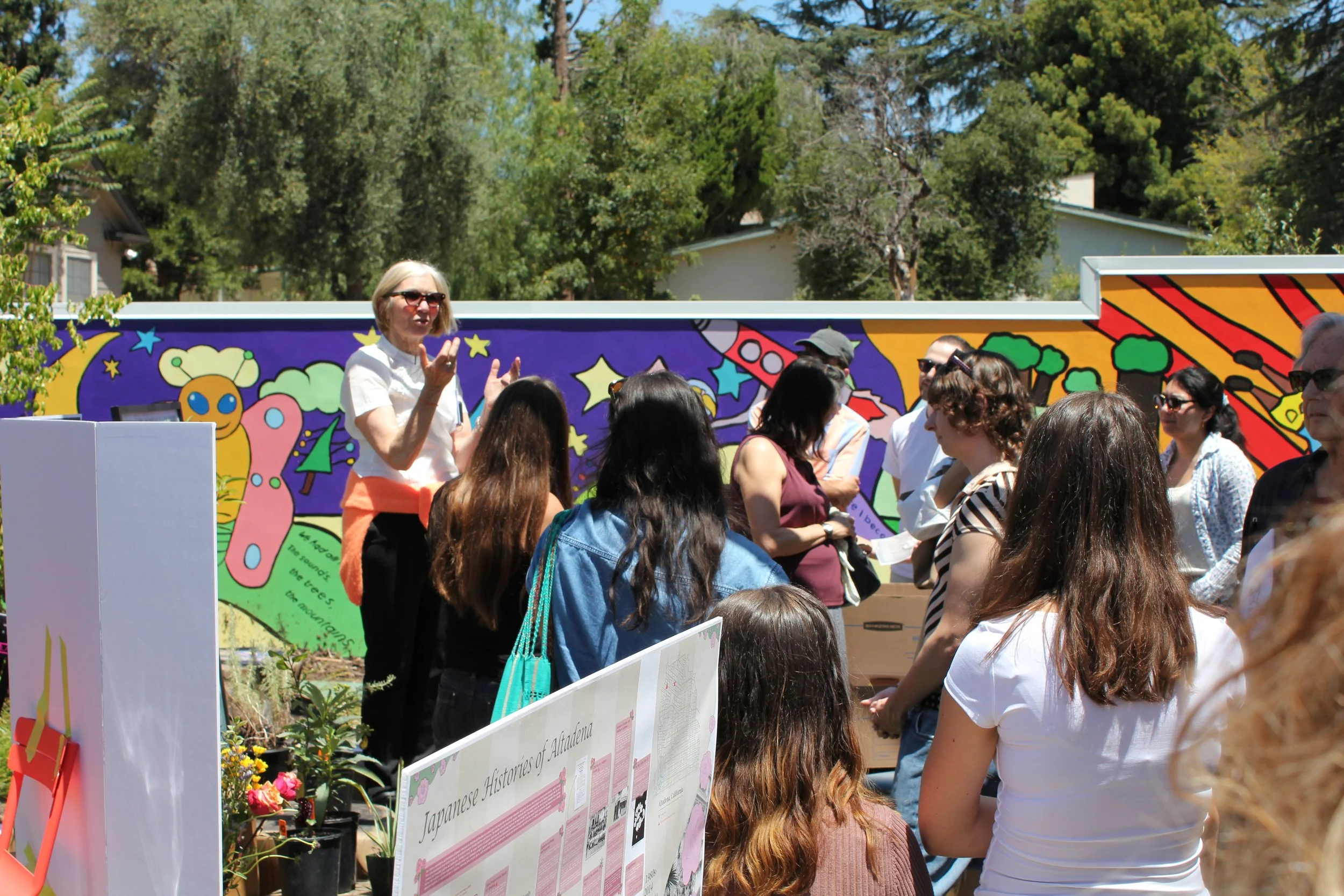
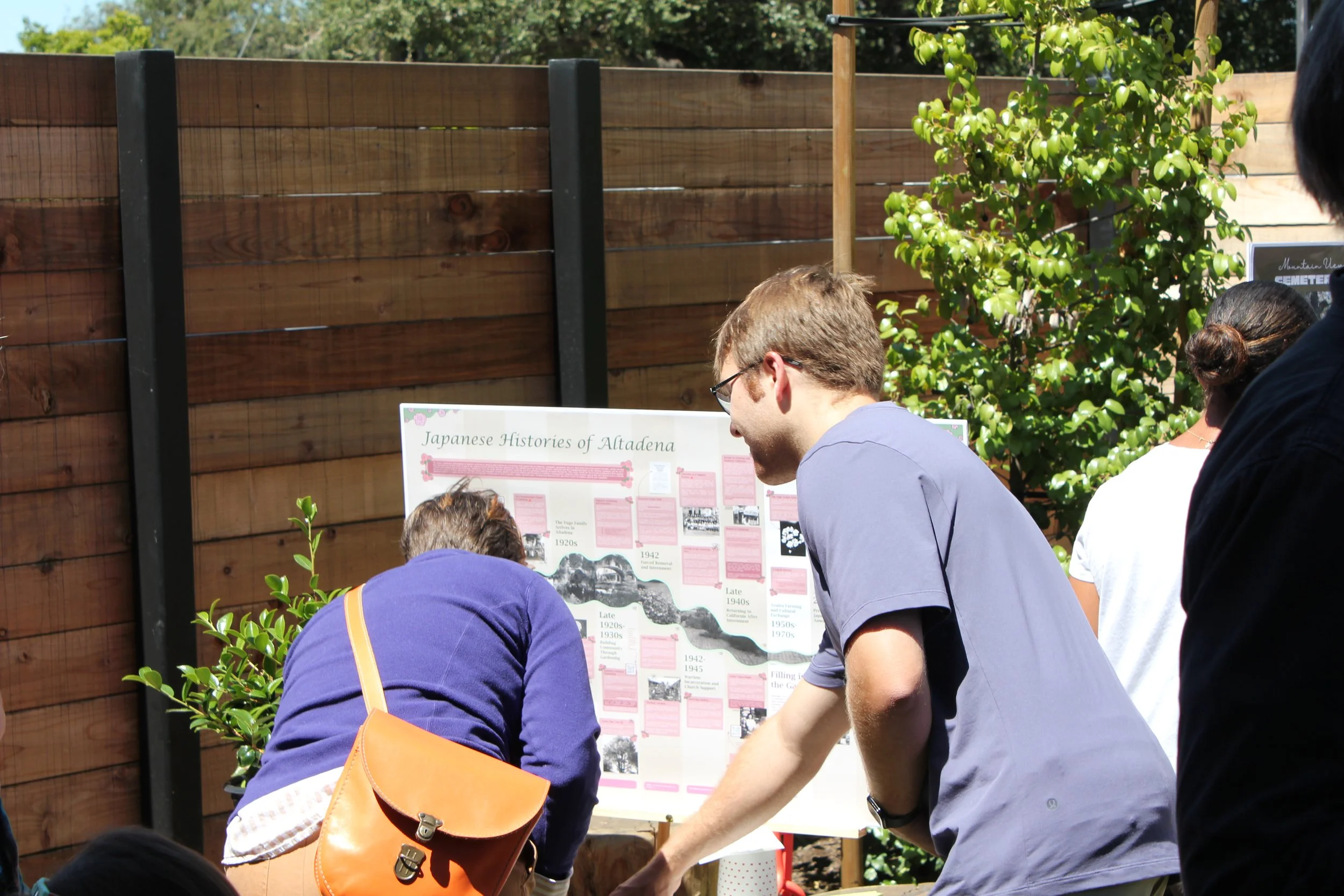
At the conclusion of the course, student work was presented at a public exhibition on May 30, 2026, hosted at the Bob Lucas Memorial Library in Altadena. The exhibition invited community partners and Altadenans to engage with the students' work and offer feedback to shape the next iteration of these public-facing projects.
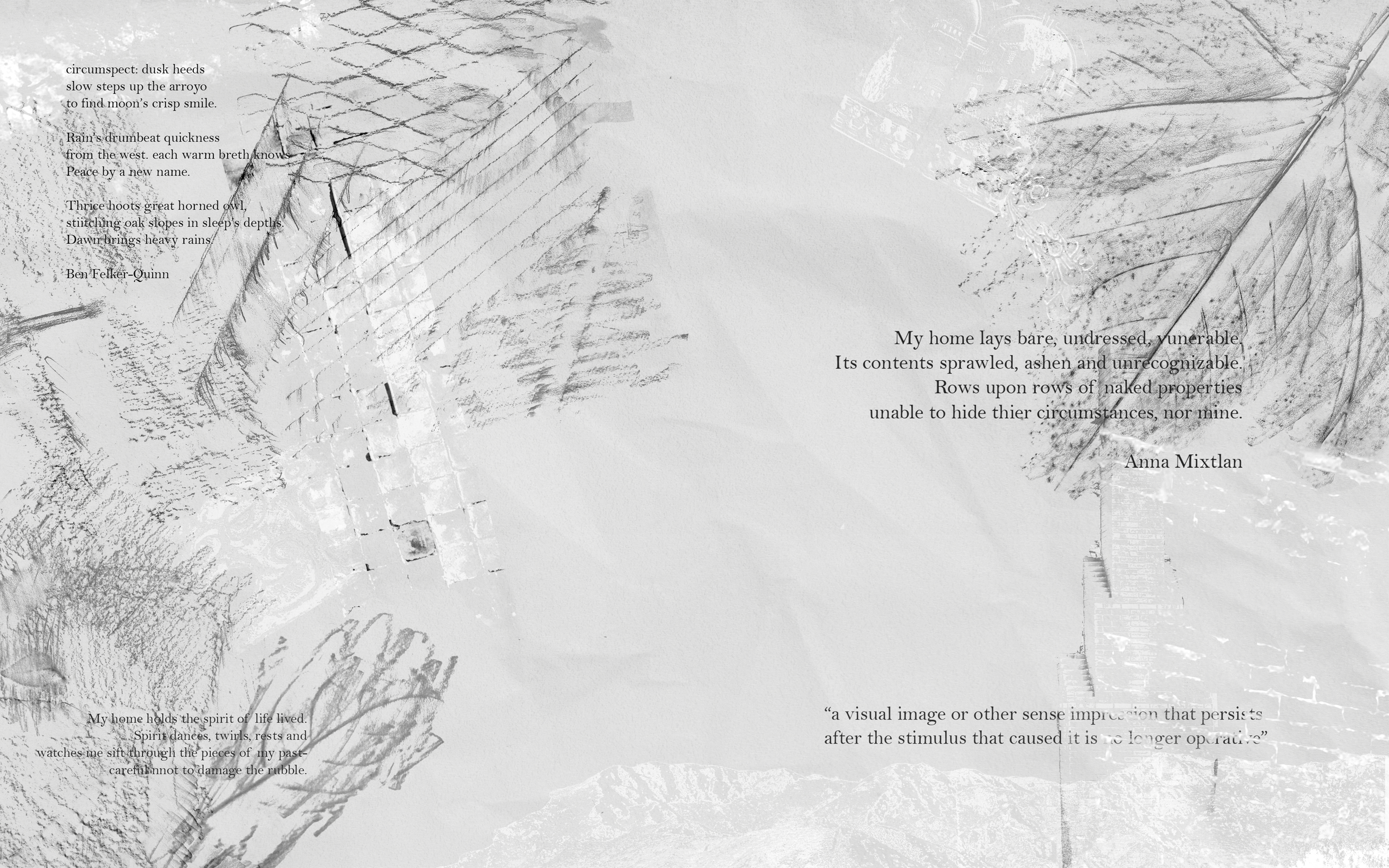
After Image
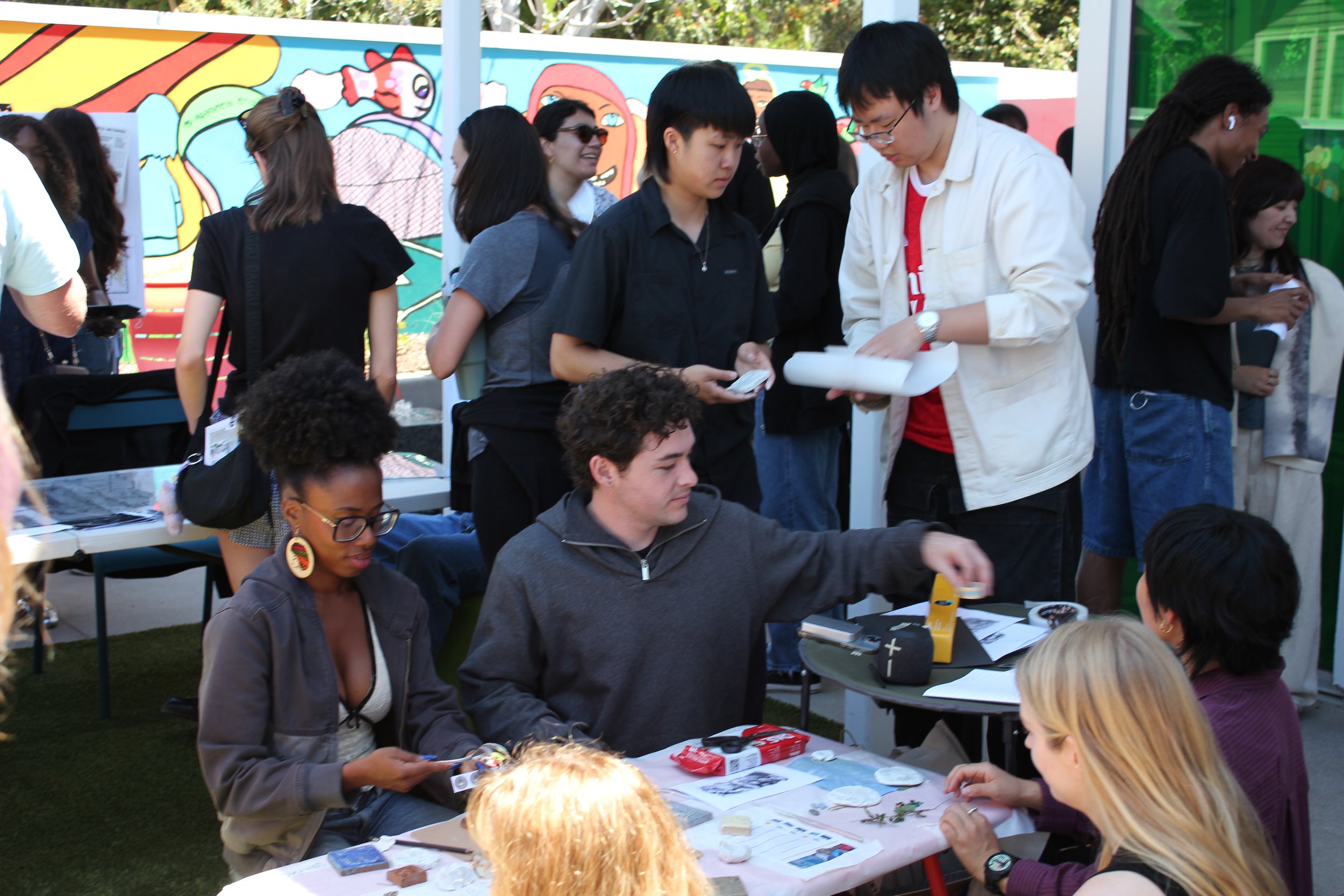
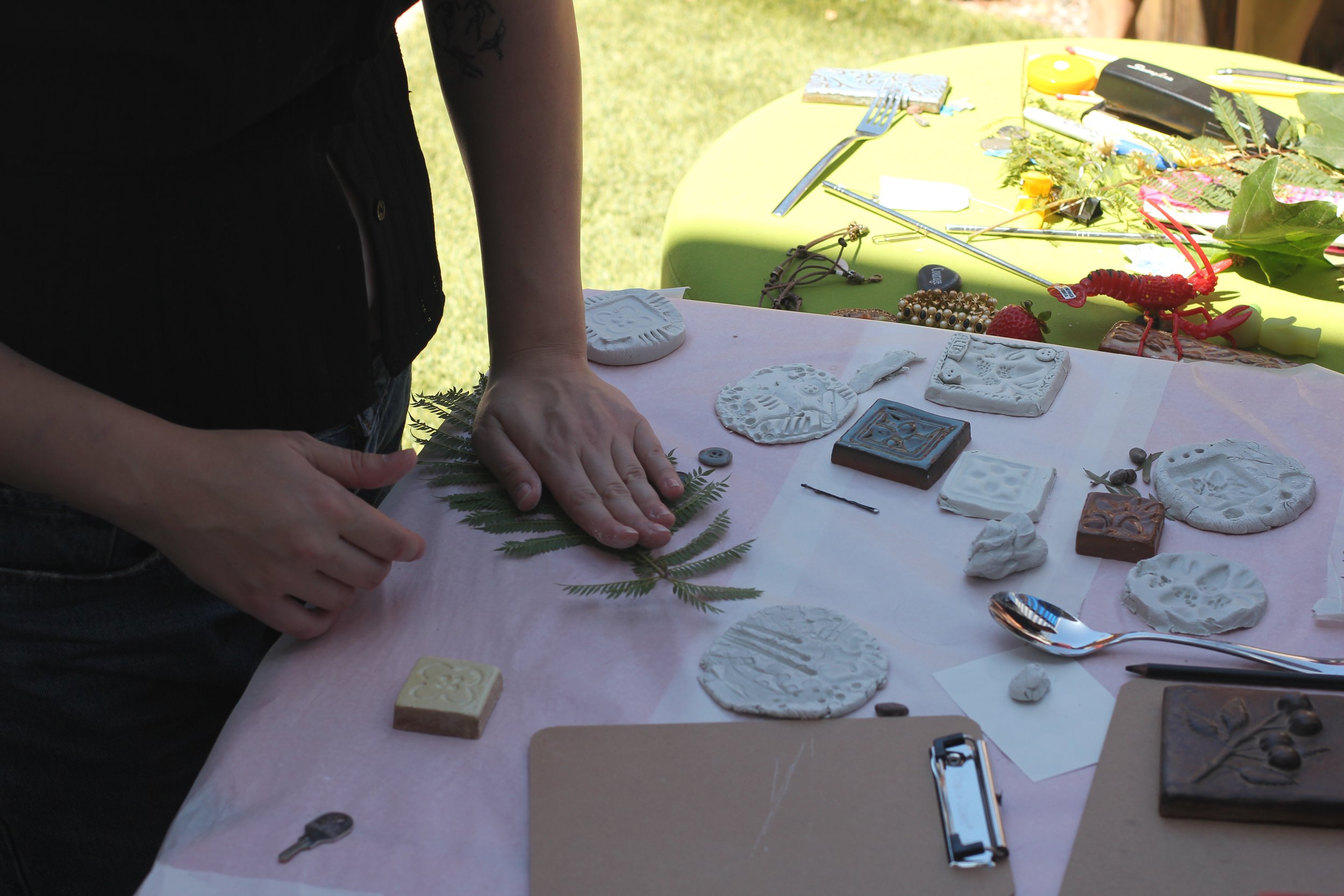
Students: Chunyi Lee, Skijler Hutson, Anna Shoemaker, Heidi Yang, Ayanna Rose
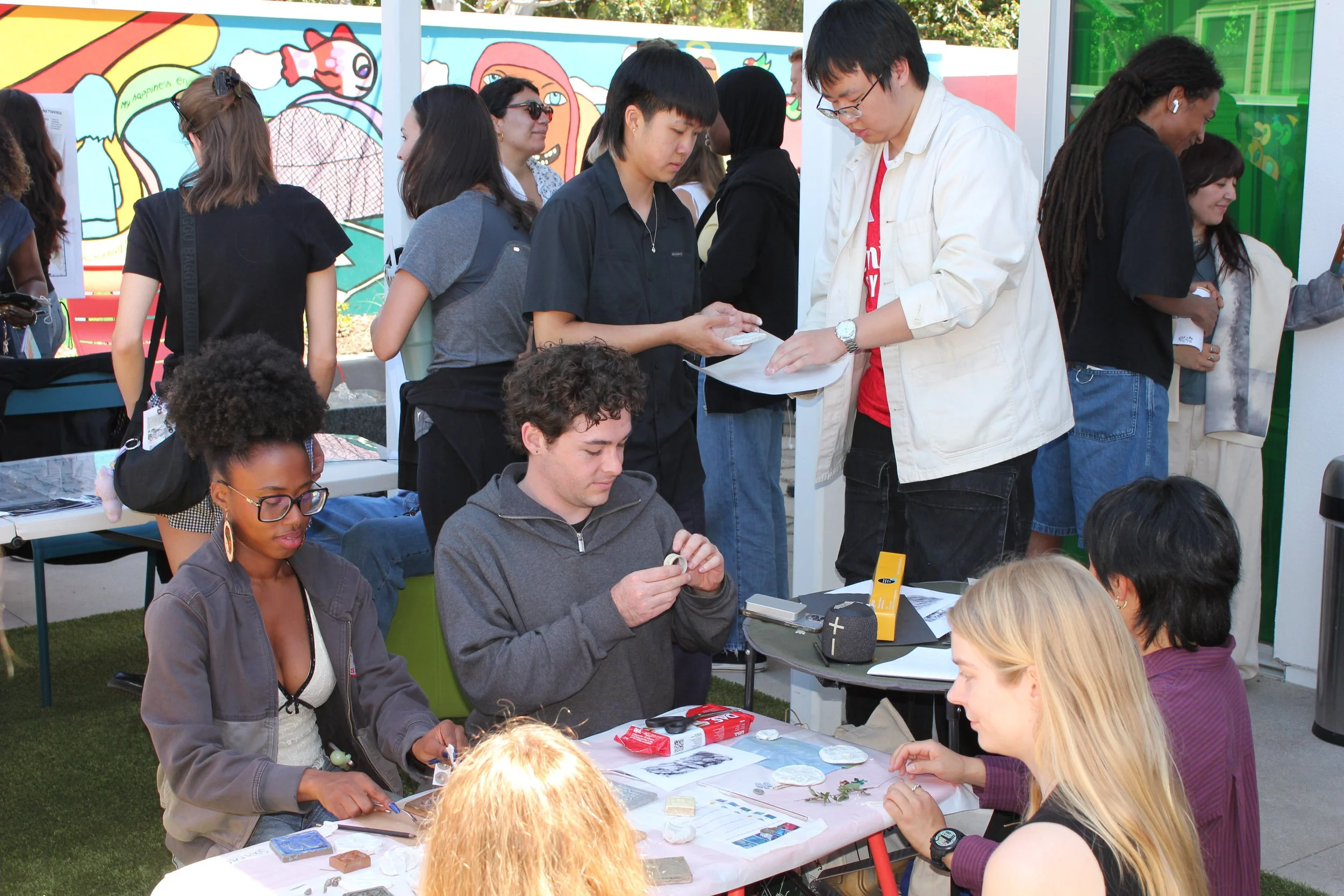
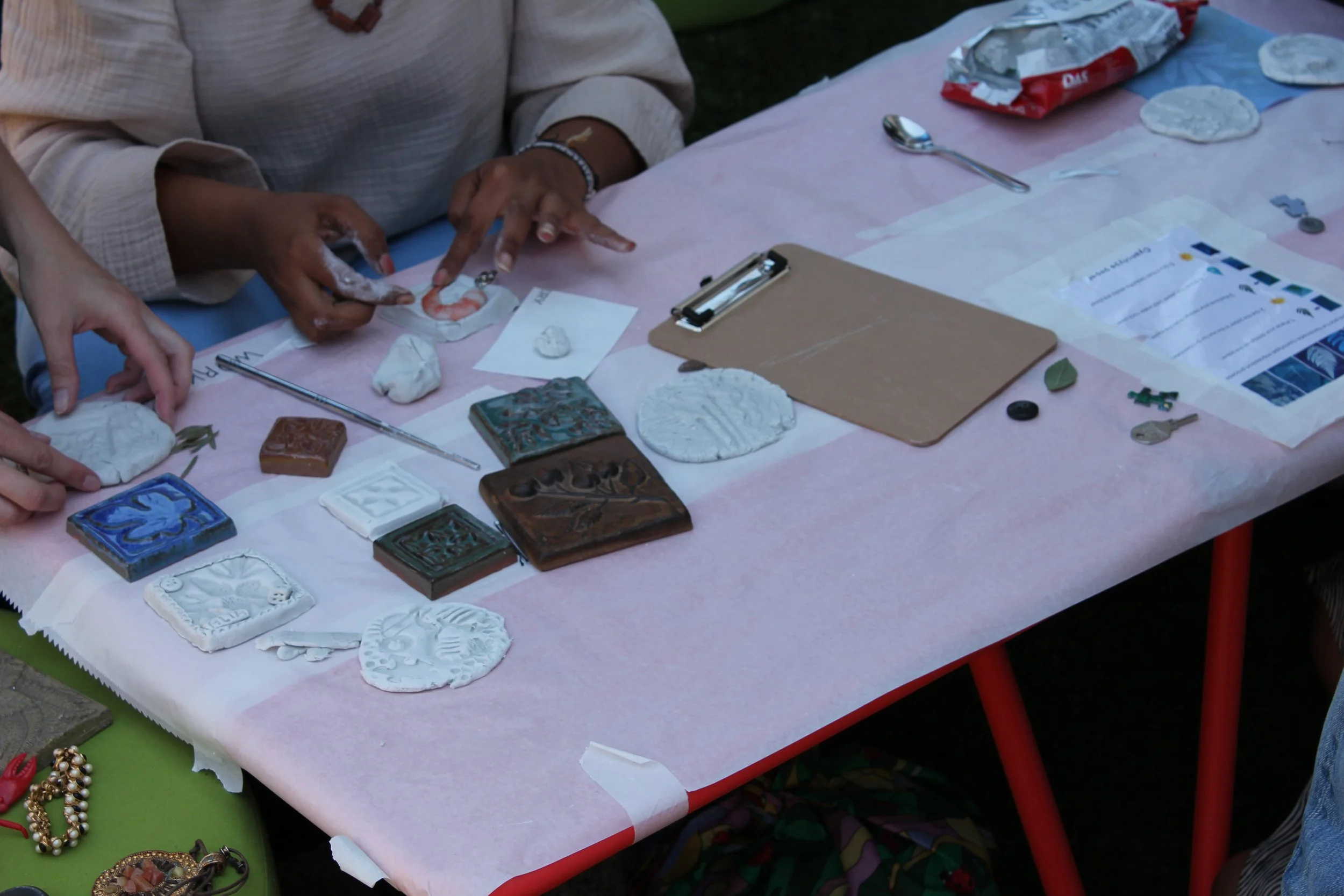
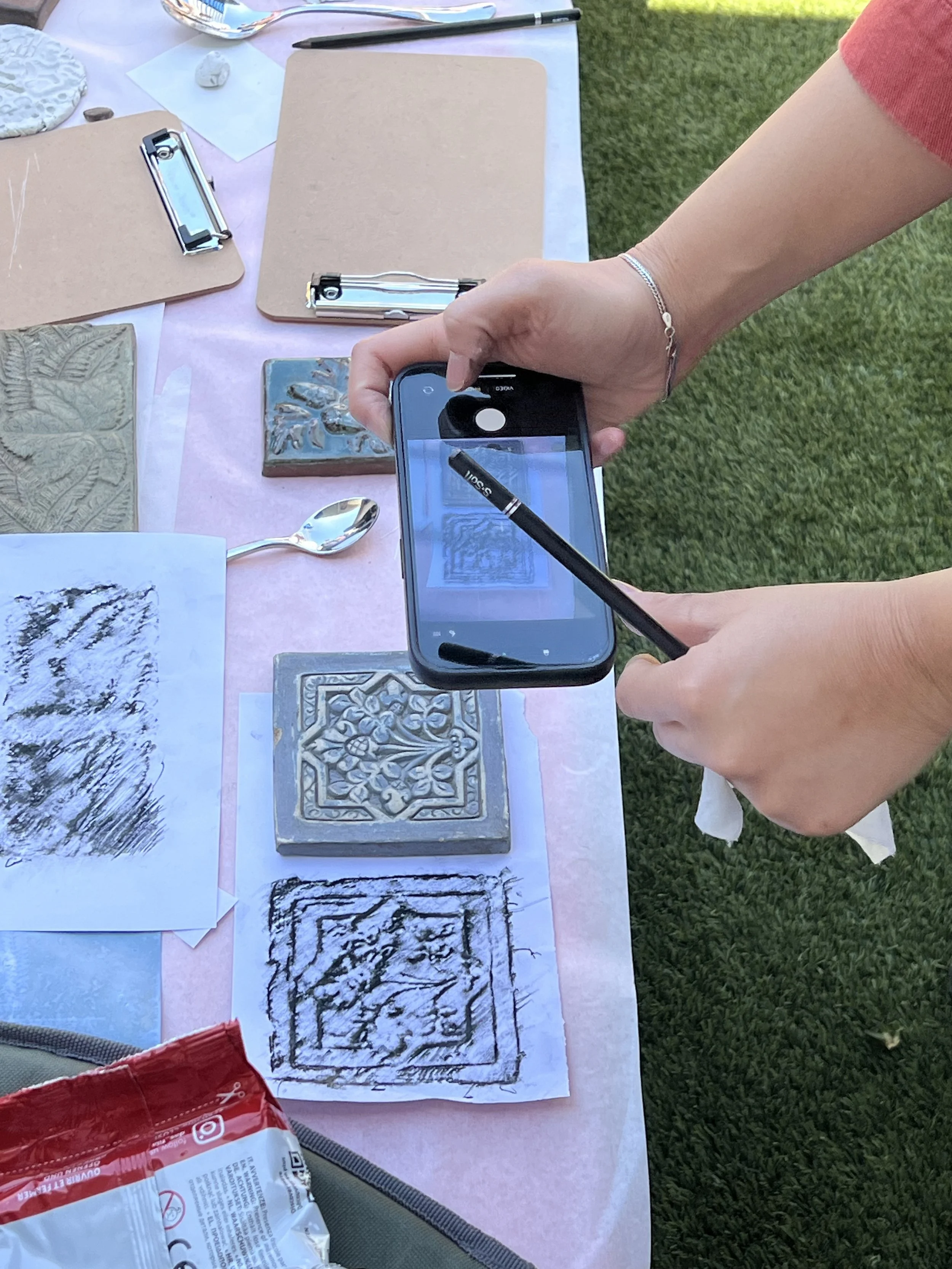
What traces do physical objects leave behind long after they are gone? In the wake of the Altadena fires, often the only objects left were materials meant to resist and contain fire in the first place: chimneys and ceramic tiles. While the surrounding structure was gone, surviving objects gestured at the lives still remembered, standing as negative copies of what once was.
Thinking about physical and metaphorical impressions of many kinds, we ask participants to consider the idea of vacancy. Choosing a familiar site, participants will search for ephemeral objects, both natural and artificial, with which to take an impression—either in clay, cyanotype, or pencil rubbing. Meanwhile, a sonic map will guide them through an assemblage of memories from Altadena. The resulting tile holds not only an impression made materially but that also made by the object on the participants themselves.
Persist and Return: Altadena Neighborhood Native Plant Care Guide
Students: Icaro Carvalho, Lynn Hur, Anthony Garcia, Shiyue Shen
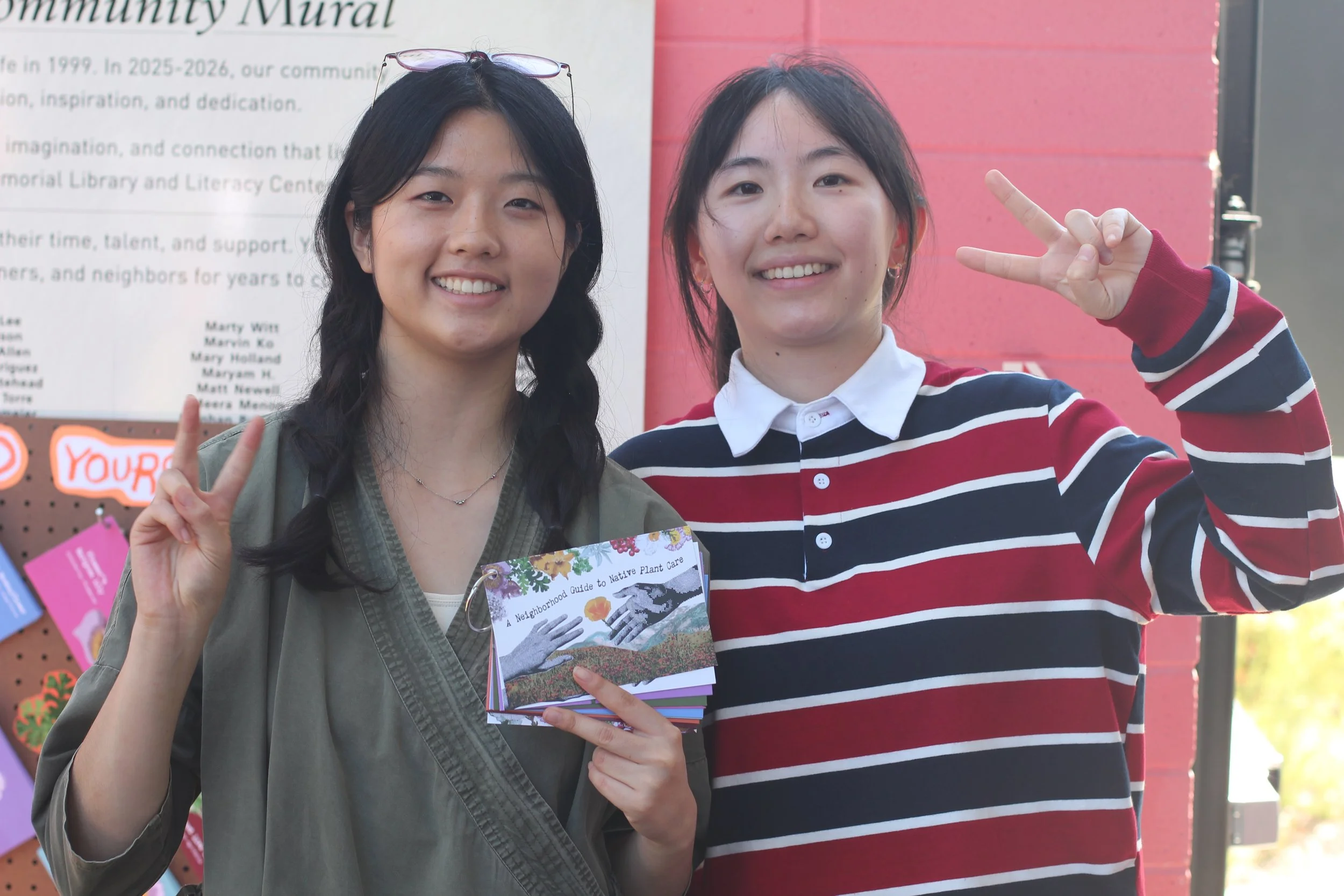
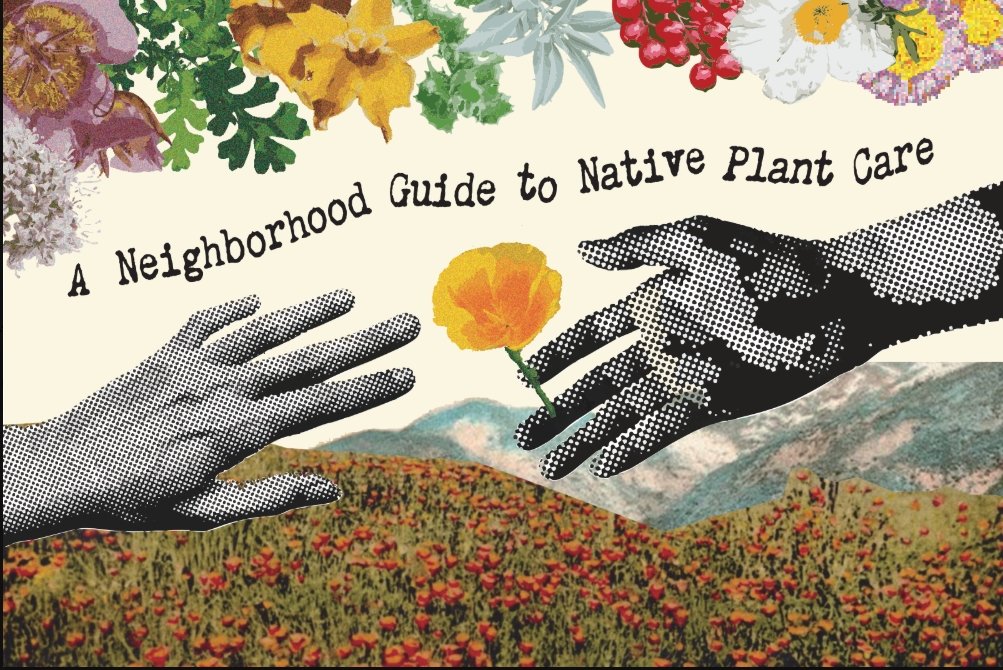
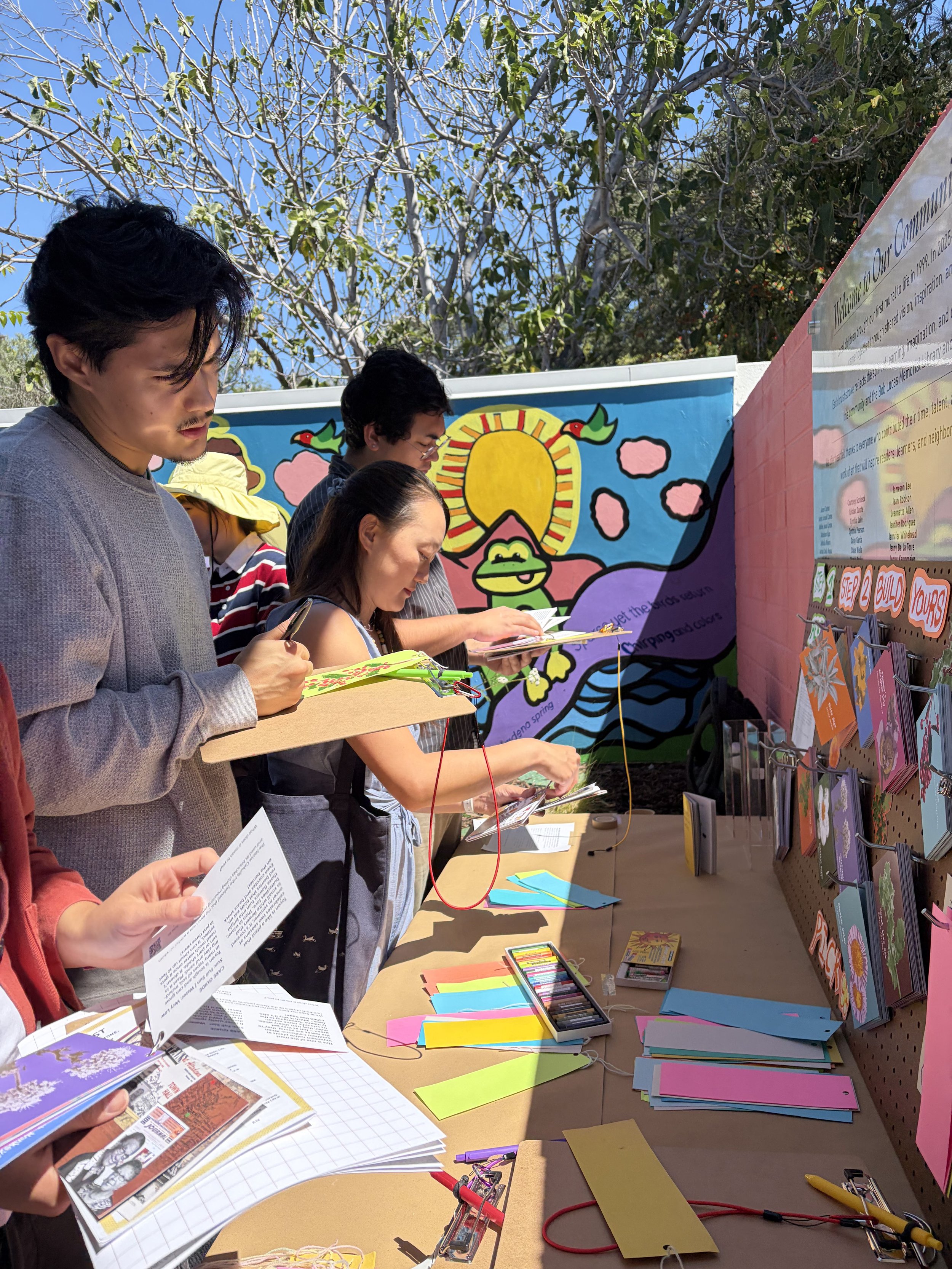
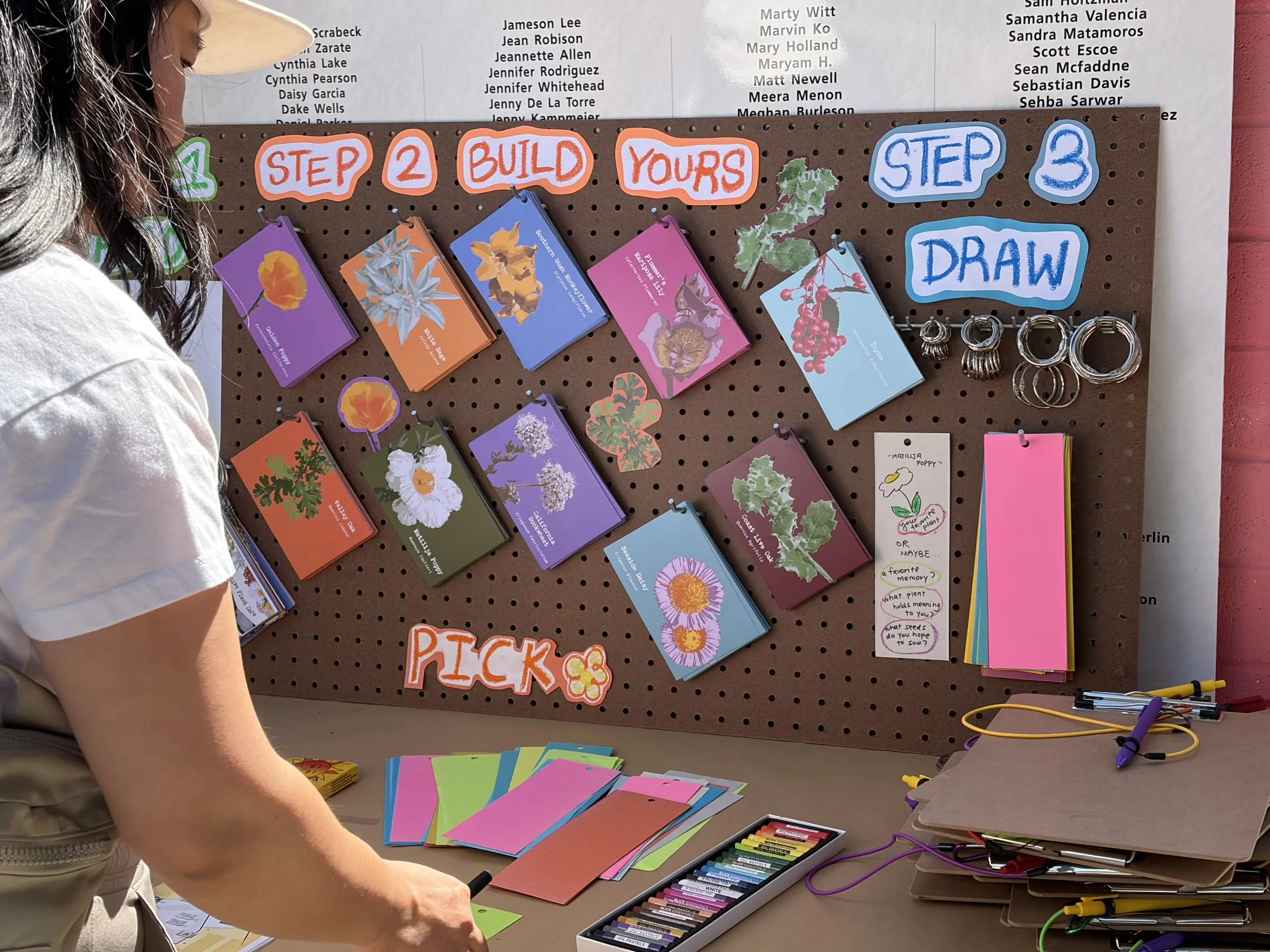
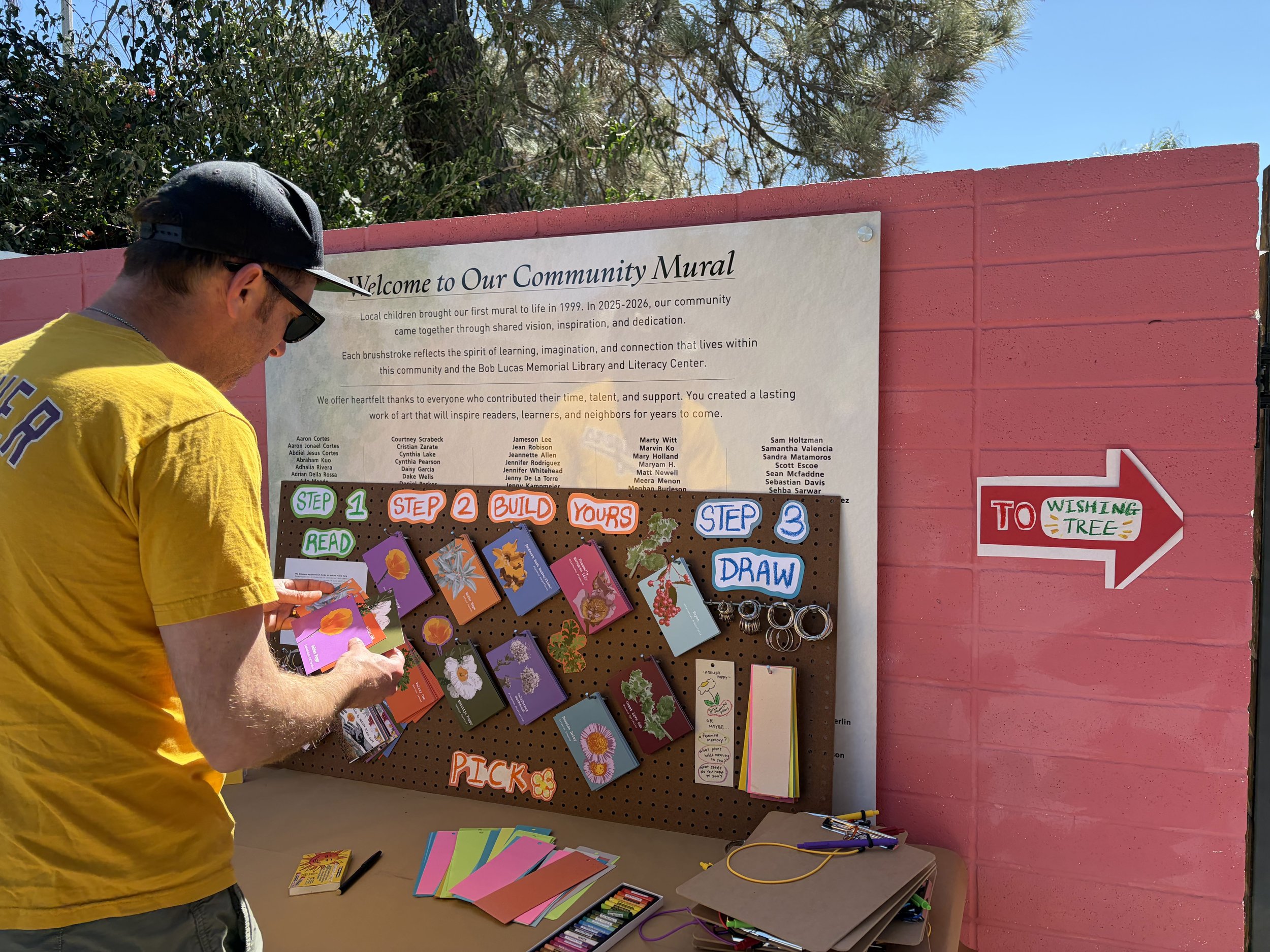
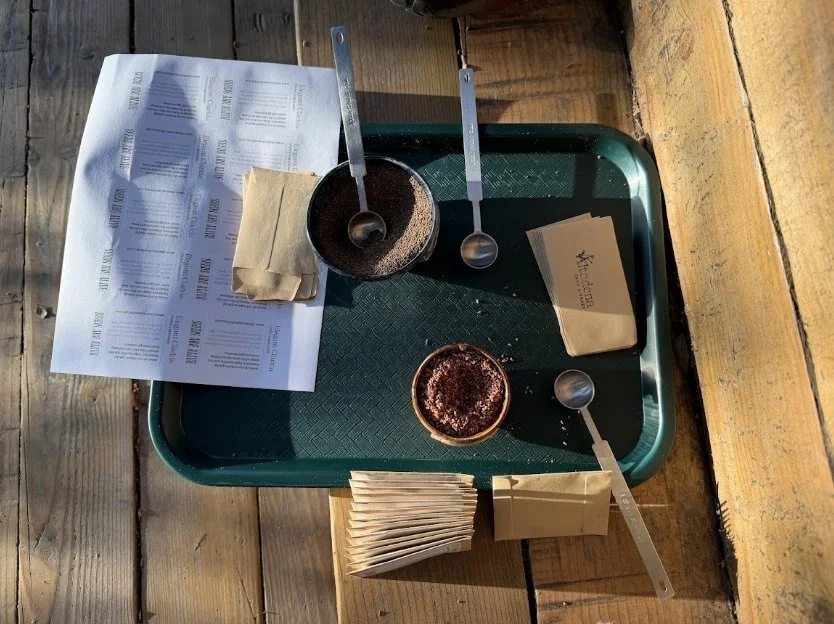
The Altadena Neighborhood Guide to Native Plant Care foregrounds the intersection of ecological and community care, in which ecological processes of care maintain stewardship of place. Our intervention responds to post-Eaton fire Altadena by centering on native plants as community symbols, dialoguing with the idea of organisms that persist, follow fire, and return.
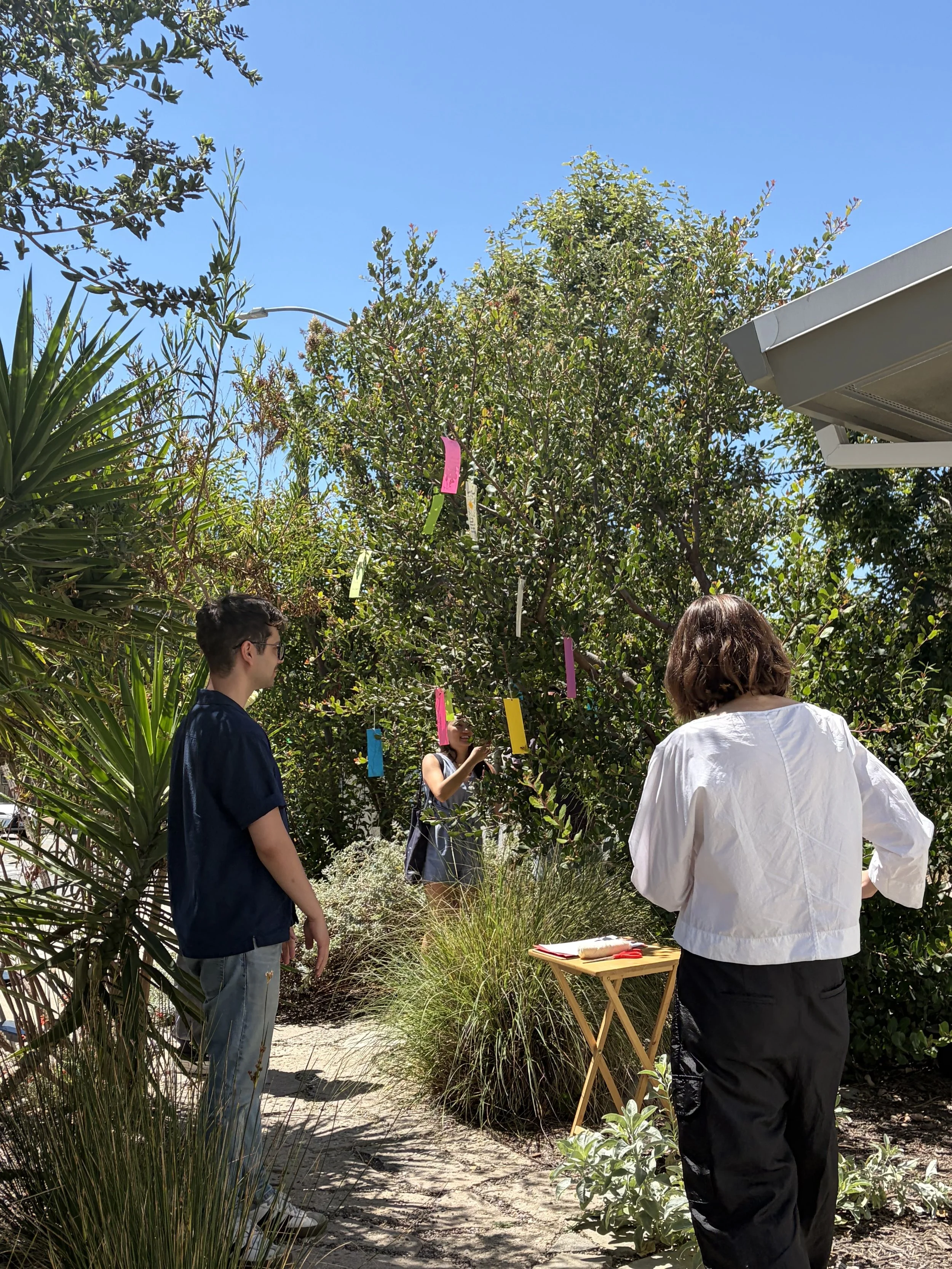
Drawing on Altadena’s historical landscape of golden poppies and on Octavia Butler’s practice of recording the plants on her daily walks, we synthesized archival sources, fieldwork, and local experience into a guided care booklet profiling ten native plants found across the neighborhood. Participants are invited to browse the booklet, create their own plant care guide, and contribute to a community wishing tree by writing about a plant they care about and its personal meaning. We hope that, together, these gestures form a living record of care. All community contributions will be archived at UCLA cityLAB.
Handling the Record: A Communal Archive in Progress
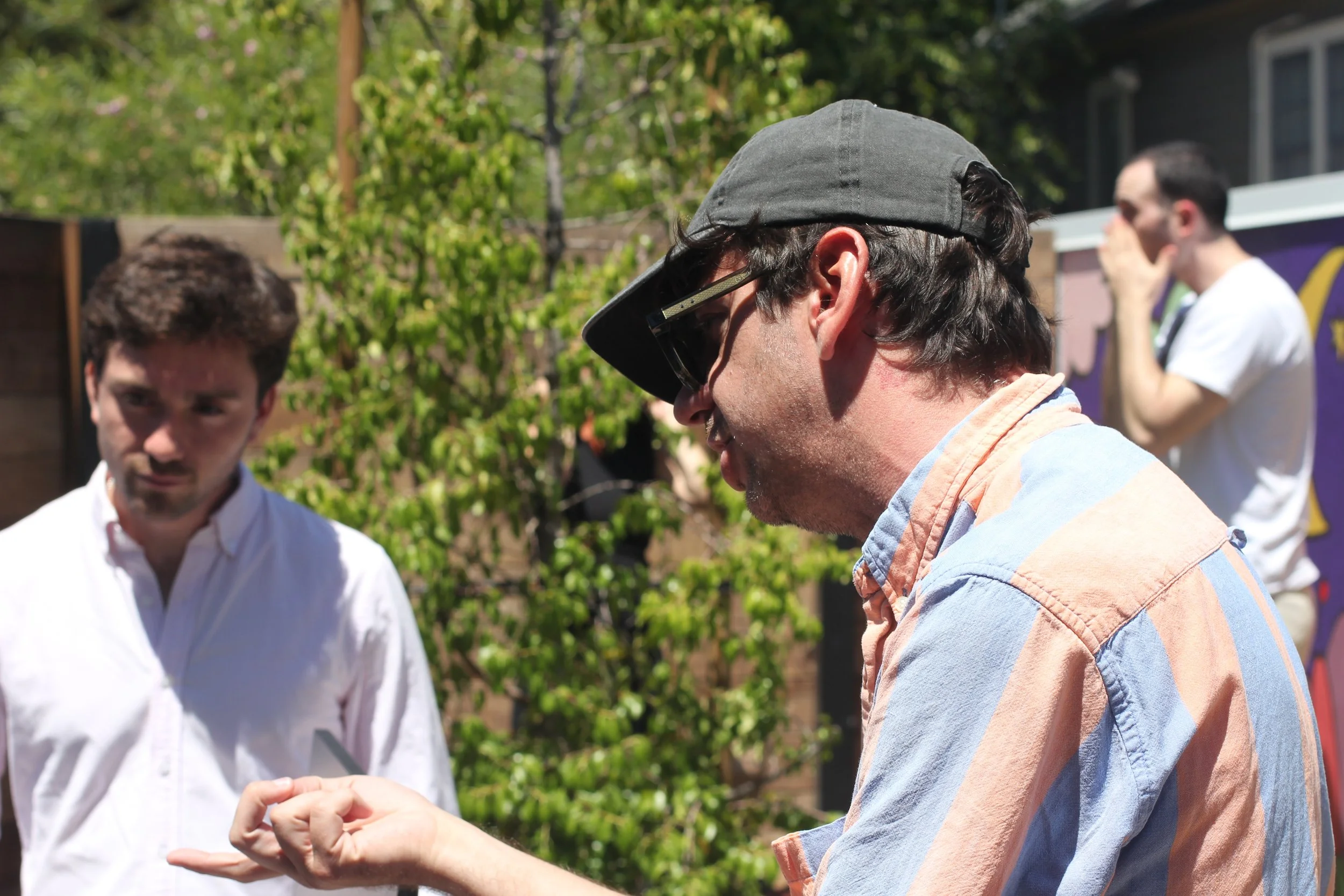
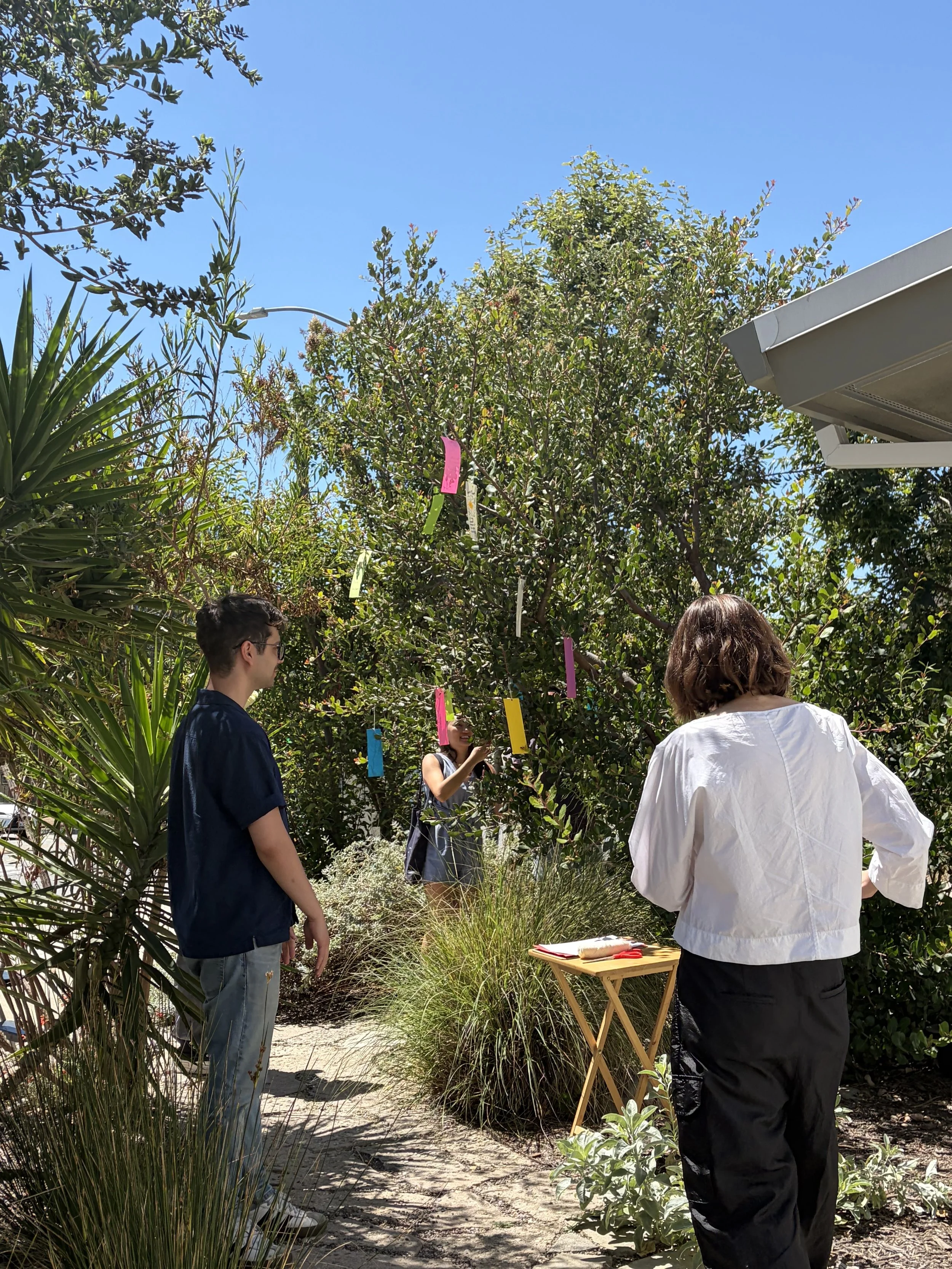
Students: Evan Eshel, Isabel Filson, Hugo Fortin, Serafin Olguin, and Sarahy Torres
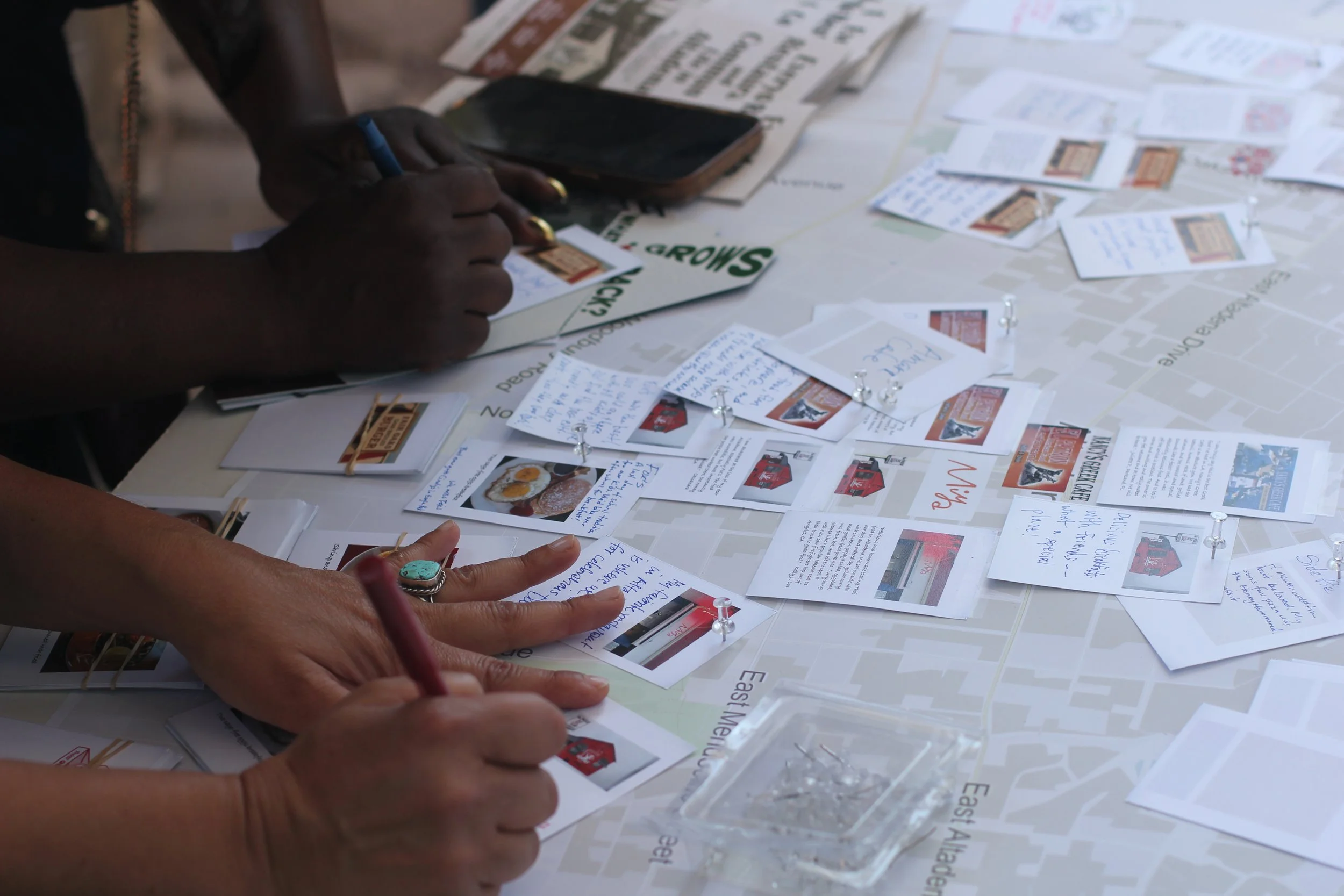
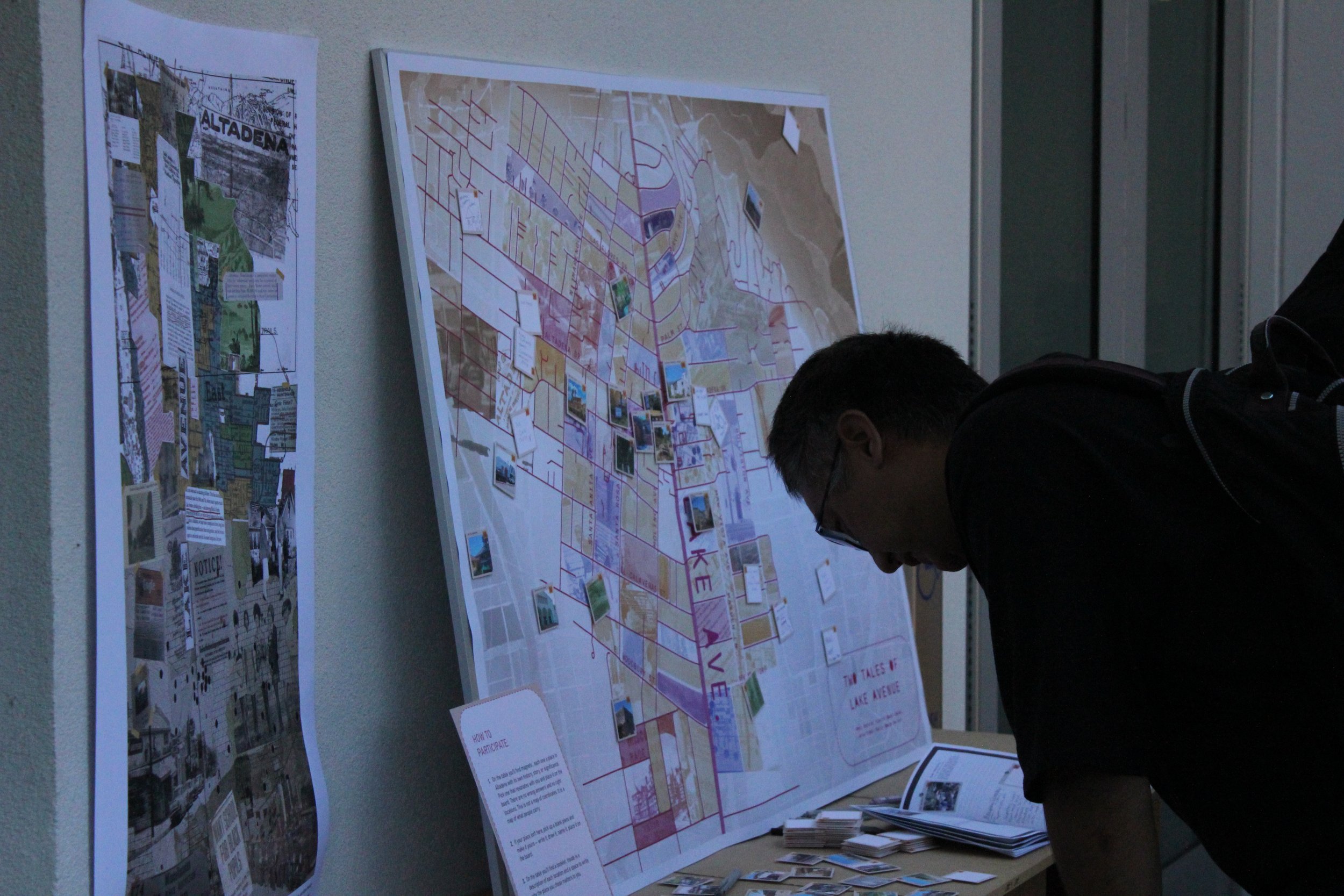
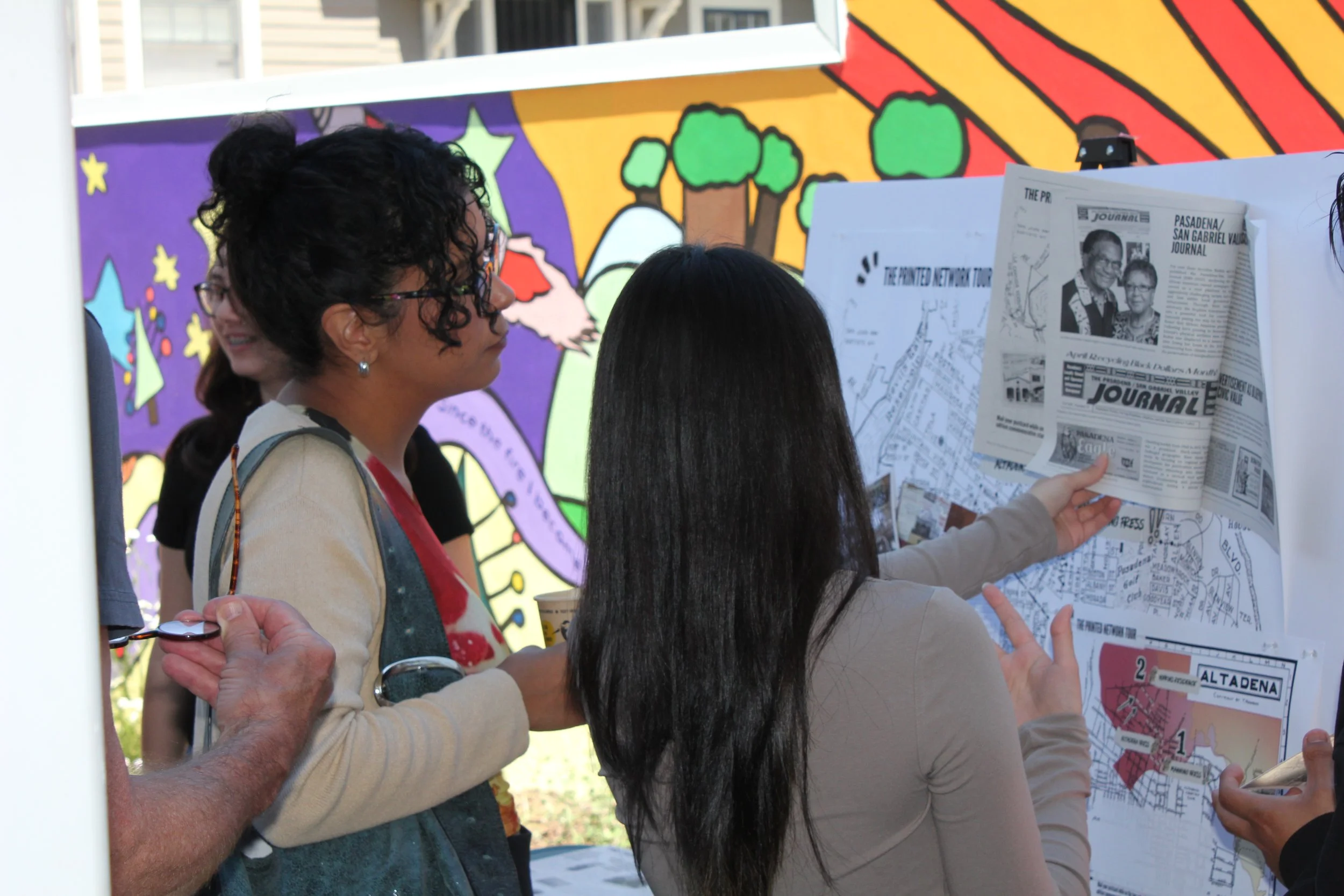
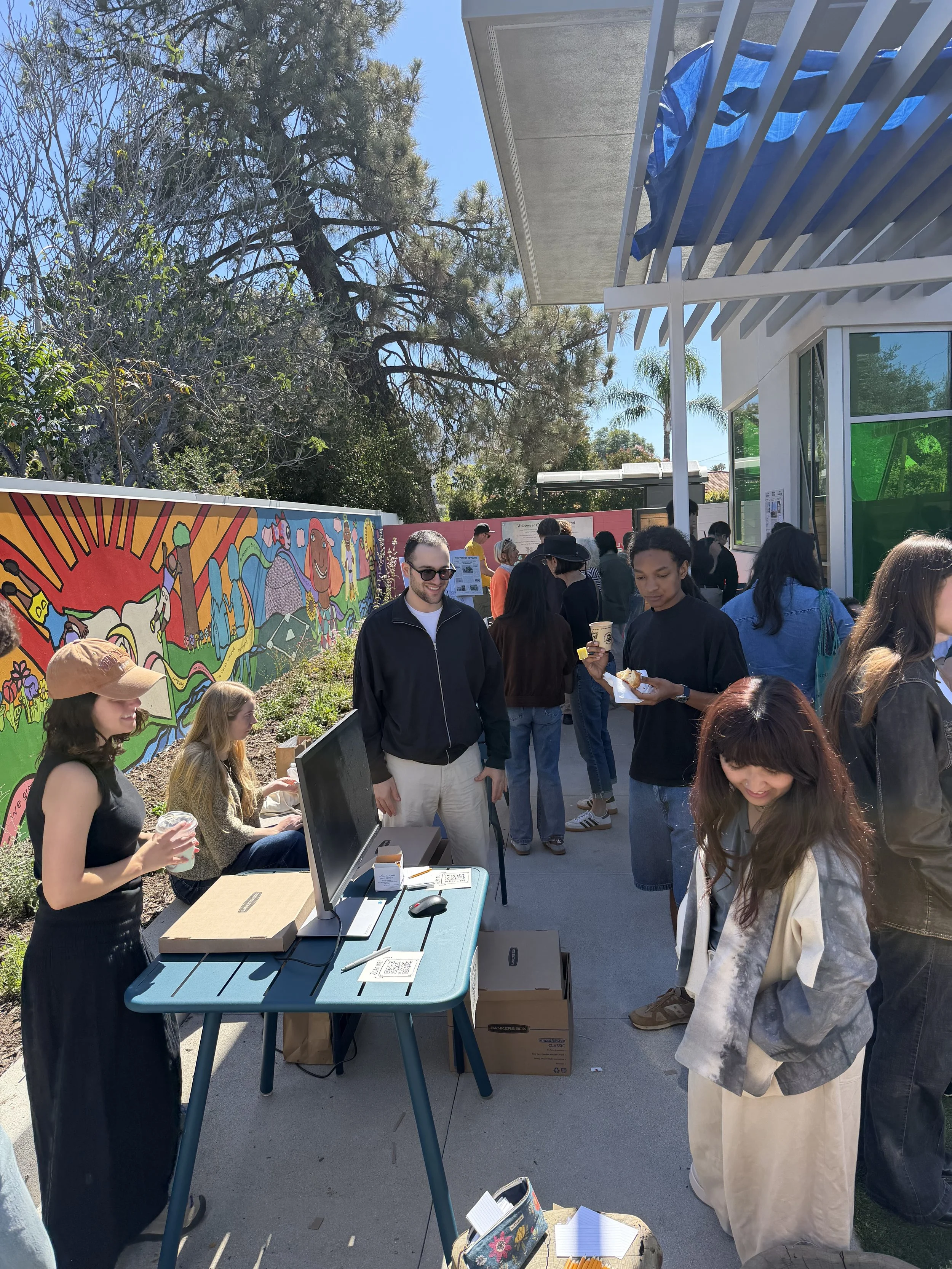
Altadena is a thick place. Layered with competing histories, imaginaries, and claims, it has thrived: a predominantly Black community spanning income, background, and generation. The Eaton Fire exposed the periphery Altadena exists within, both spatially and bureaucratically amidst greater Los Angeles and within archives. Systems failed the people of Altadena. At least nineteen people died as a result of the fire. We kept returning to where gaps occur and what they conceal and reveal: in ephemera, word of mouth, what Saidiya Hartman calls the lives that left only a faint trace. We are visitors here and do not pretend otherwise. Care means refusing to speak for a community and instead building a mode through which it can organize. Following Diana Taylor, we believe embodied, participatory acts can transmit what documents cannot. Open the boxes. Handle the prints. Reconstruct, partially and imperfectly, the archival encounter. End with the website: a thick map, electronic and layered, where spatial and archival elements accumulate alongside fragments, provocations, and lines of inquiry
LIFE//REGEN, BIO//REMEDIATE
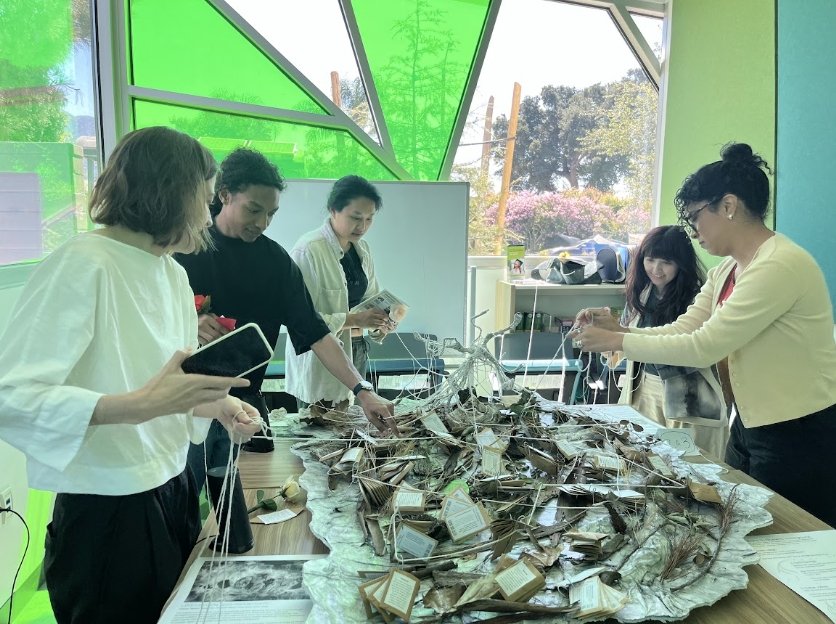
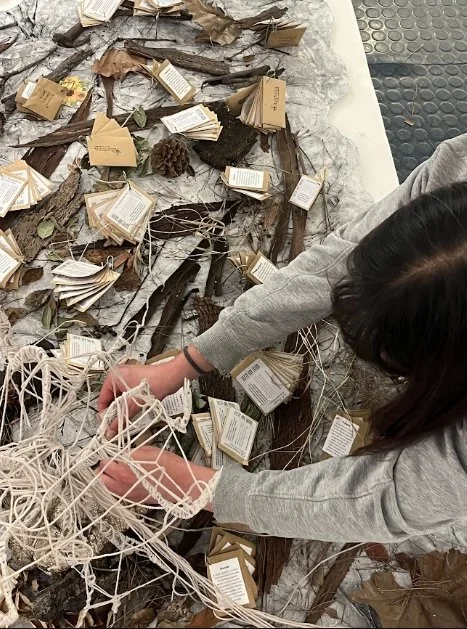
Students: Abhijeet “Moodzi” Mudgerikar, Alexander Morris, Hardy Wang, Kathy Zhang
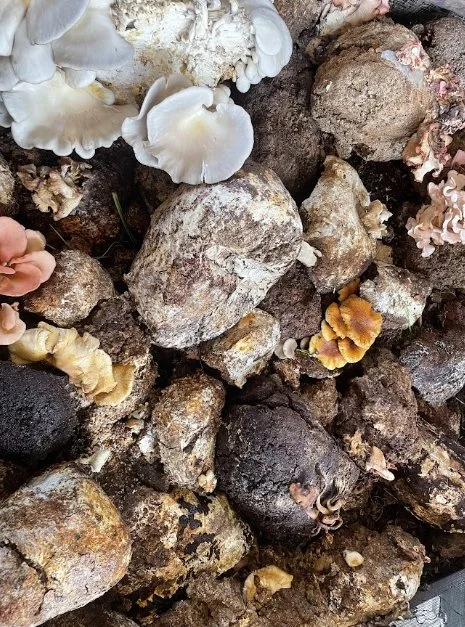
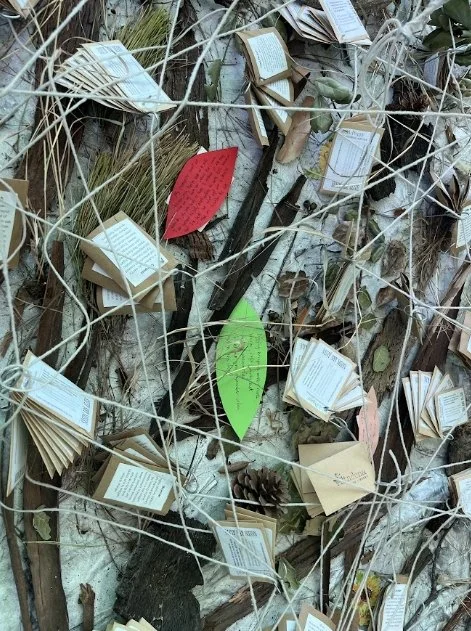
Our project conceptualizes care as an ongoing practice operating beneath the surface through ecological processes and communal labor. Drawing from bioremediation, particularly mycoremediation, we approach care as a regenerative force that sustains collective life. The performance intervention translates this into an embodied, spatial experience, inviting participants to consider repair as a process constantly unfolding underground.
Inspired by community members and local organizations, we approach Altadena as a site of rooted knowledge, cultivation, and adaptation. The work amplifies ongoing practices of tending land and mutual aid in the aftermath of the Eaton fire.
Participants navigate threaded pathways through touch and conversation while engaging with a sonic map which invites them into an underground care network. As participants move through the installation, they are invited to form relations with the land and one another. Poems emerge from each pathway, gradually accumulating into a mycelium-like web of interconnected stories and collective repair.